Enfocados al futuro paciente: los estudiantes de Enfermería y Medicina del CEU entrenan sus habilidades comunicativas, claves en su profesión
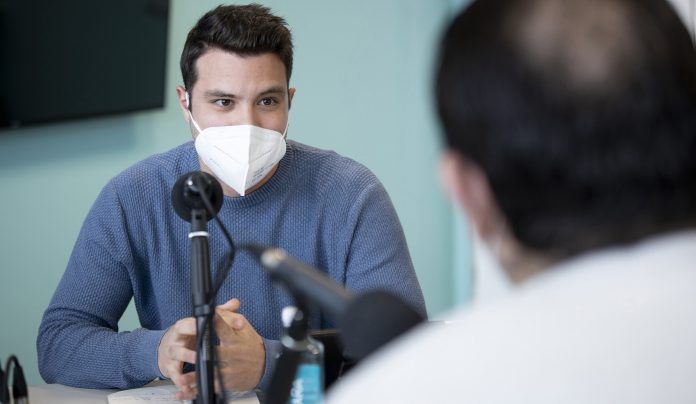
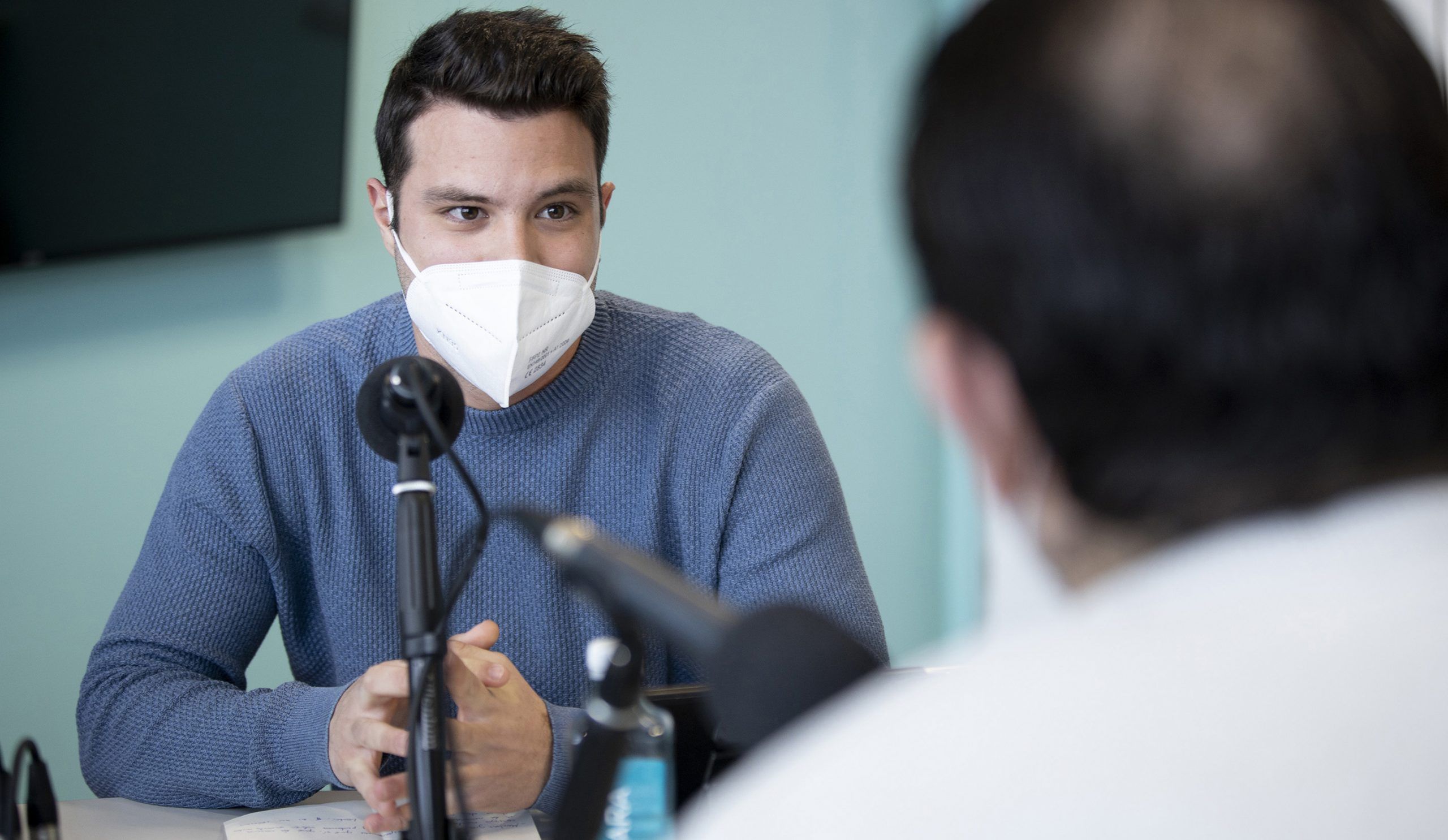
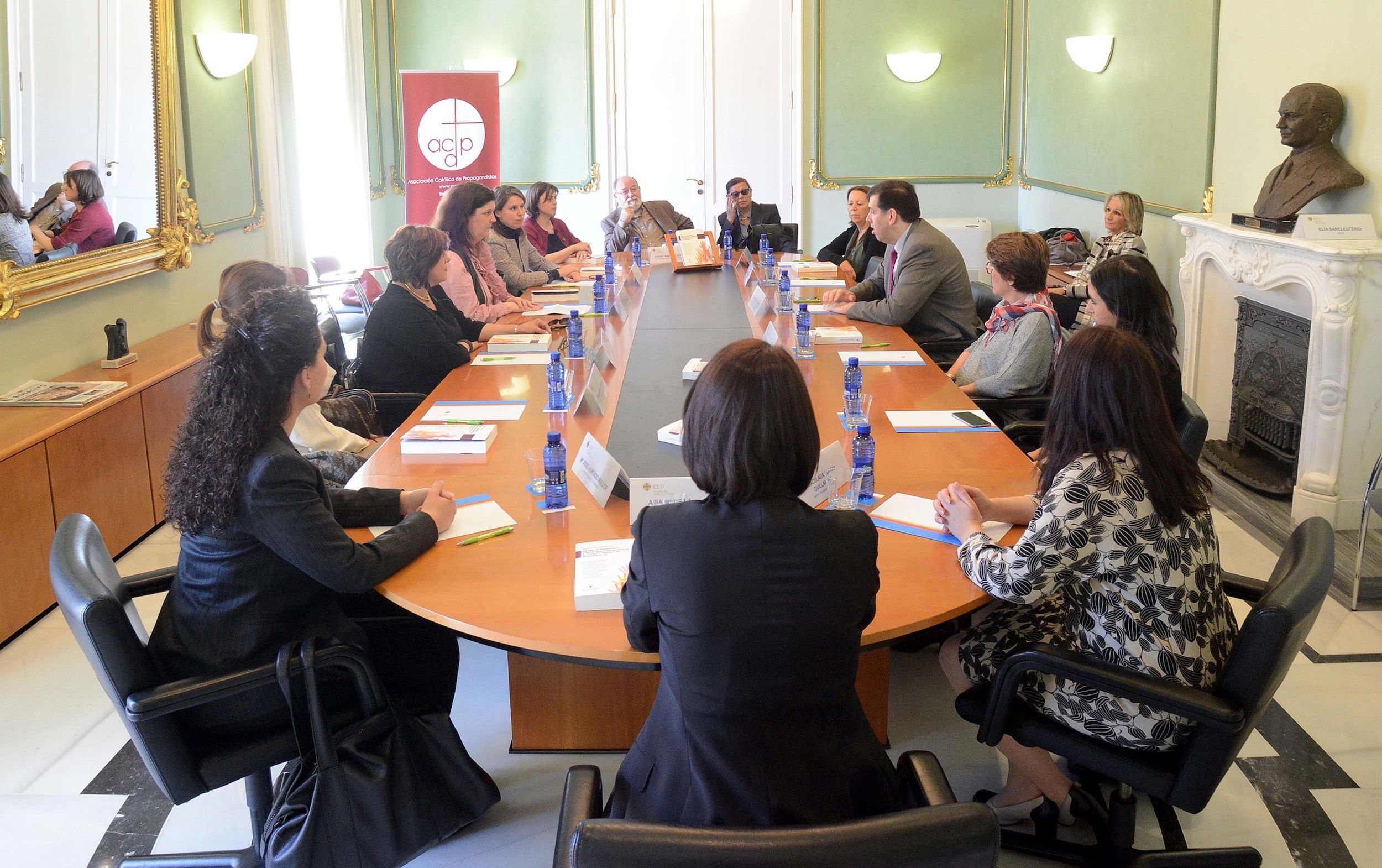
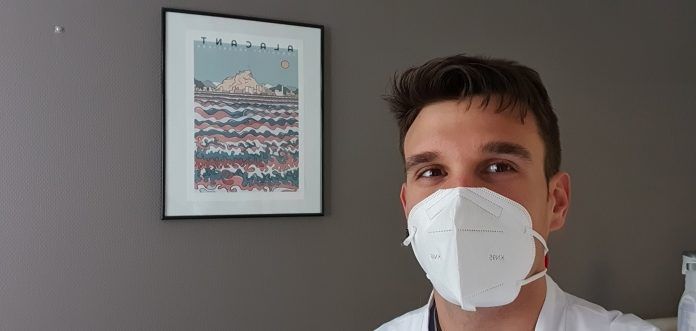
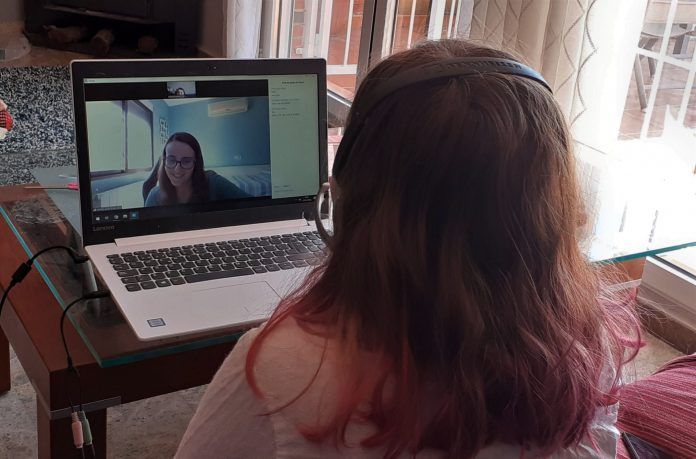
Una estudiante de Enfermería entrevista a Abel Baquero sobre terapias en trastornos mentales
Las personas, y no solo su enfermedad, deben ser el centro del ejercicio de la asistencia sanitaria. Para alcanzar este desafío, es imprescindible promover una comunicación de calidad entre los profesionales de la salud y sus pacientes. Ese es el principal objetivo del proyecto Radio Health de la Universidad CEU Cardenal Herrera, con el que los estudiantes de Enfermería y Medicina refuerzan sus habilidades de escucha y expresión con la vista puesta en el futuro.
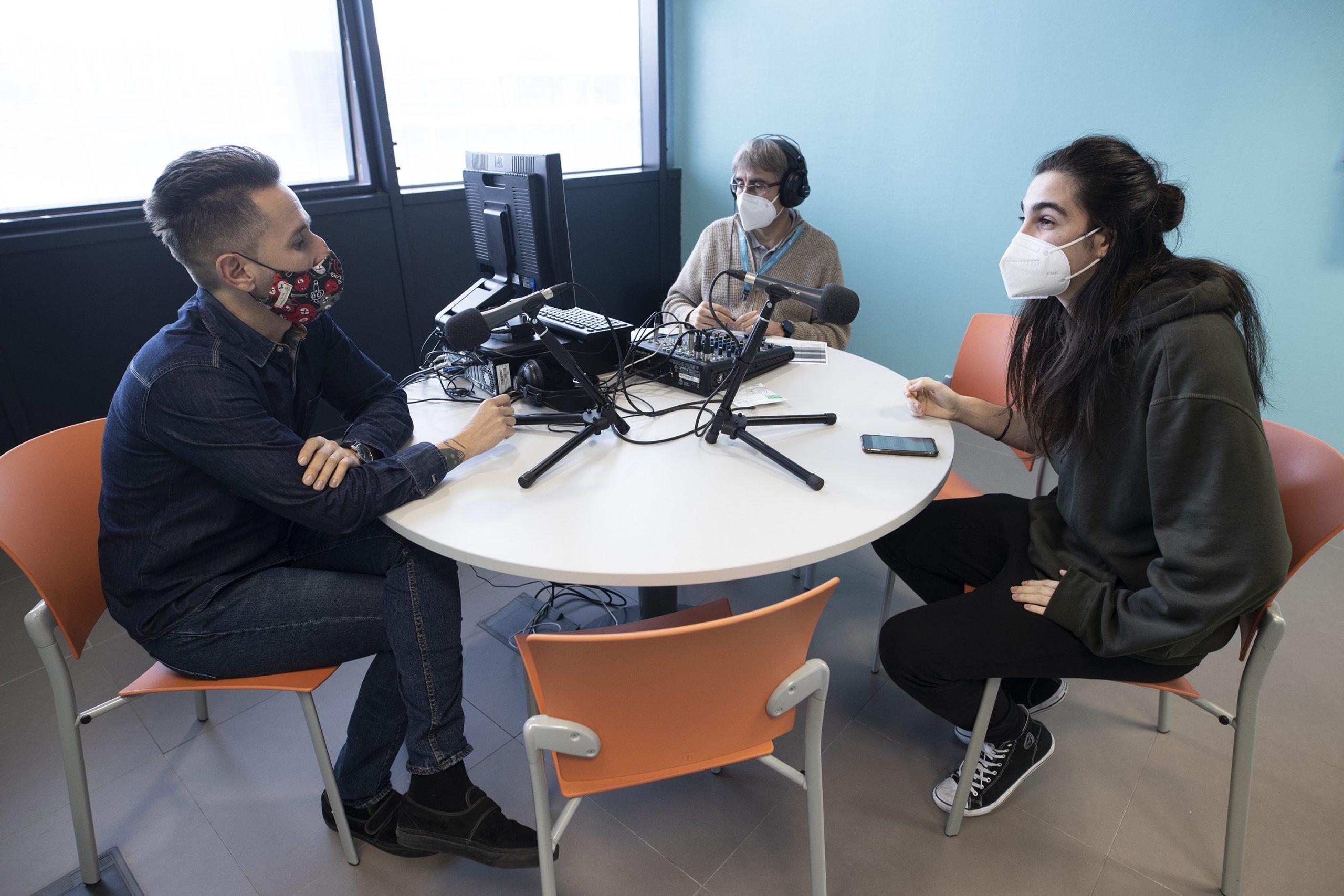
Radio Health es un programa de radio sobre salud que se escucha a través de Radio CEU, la emisora de esta universidad. Este innovador proyecto formativo, que cumple ya tres años, permite a los futuros profesionales de la sanidad entrenar sus habilidades comunicativas entrevistando a expertos en salud, analizando la actualidad sanitaria y compartiendo consejos saludables con los oyentes. Y es que otro de los retos de esta original iniciativa es contribuir a la educación en salud de los ciudadanos.
Con este proyecto de innovación, los futuros médicos y enfermeros
refuerzan sus habilidades de escucha y expresión
con la vista en el futuro
Participar en este programa proporciona un aprendizaje único a los próximos profesionales de la sanidad, ya que mientras preparan los contenidos y los divulgan a través de las ondas, practican cómo seleccionar la información relevante y veraz, realizan una escucha activa y empática de sus interlocutores y “traducen” el lenguaje especializado a todo tipo de personas. En suma, un entrenamiento de primera para comunicarse eficazmente con sus futuros pacientes.
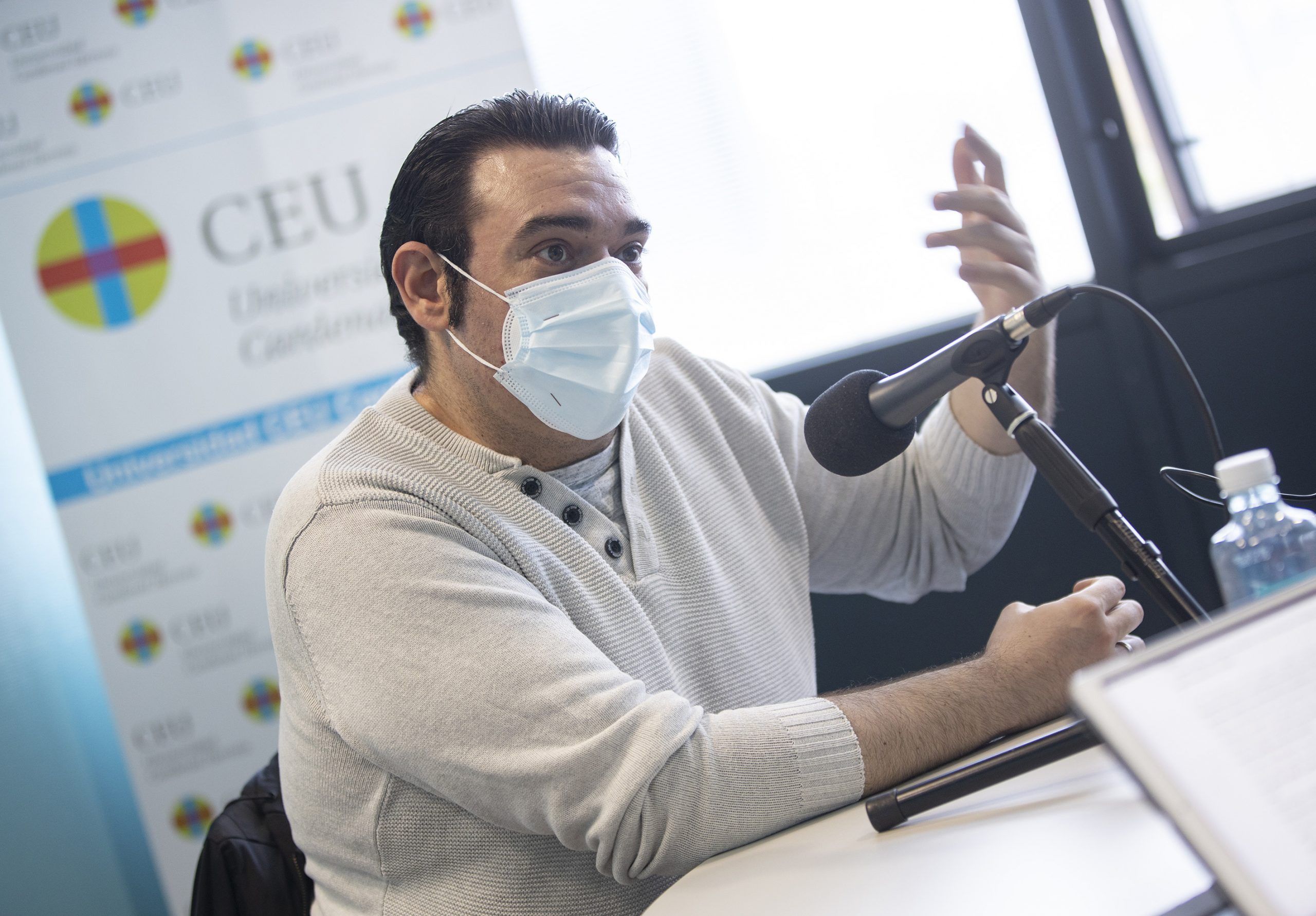
Numerosos profesionales de la sanidad han pasado por los micros de Radio Health
Más allá de la Covid
A lo largo de este curso, marcado por la pandemia, los estudiantes han tenido la oportunidad de analizar, cómo no, la crisis de la Covid-19, como enfermedad y desde la experiencia de los profesionales. Pero también han trabajado sus destrezas comunicativas abordando muchos otros temas relacionados con la salud. Por ejemplo, a través de entrevistas realizadas a médicos, enfermeros, psiquiatras, investigadores y otros sanitarios sobre cuestiones tan diversas como el peligro de las pseudoterapias, alimentos modificados genéticamente, primeros auxilios domésticos, cuidados de las úlceras en personas de la tercera edad, terapias en trastornos mentales o medicina dental del sueño.
Los estudiantes han vuelto a acoger con entusiasmo esta novedosa iniciativa del CEU. Así lo cuenta Gorka González: «Radio Health me ha enseñado a traducir la información sanitaria a un lenguaje sencillo, comprensible para todos, y a ser comunicativo y claro para hacerme entender y para transmitir confianza a través de la palabra”. “Creo que es muy importante trasladar la información como te gustaría que te la dieran a ti cuando eres el paciente», destaca el estudiante de cuarto de Enfermería.
‘He aprendido a traducir la información sanitaria a un lenguaje sencillo, a hacerme entender y a transmitir confianza’
Su compañera Nadia Honrado califica este proyecto de innovación como “una iniciativa útil y divertida que proporciona un aprendizaje diferente”. “Para nuestro futuro profesional, prosigue, ha supuesto una oportunidad de ampliar nuestros conocimientos en otros ámbitos de enfermería. Por ejemplo, para aprender a ser divulgadores de salud, que se han demostrado claves en los medios y las redes durante esta pandemia. Y, por supuesto, para mejorar la comunicación enfermero-paciente”.
Los futuros sanitarios han practicado la escucha y la expresión oral, claves para su futuro
Centrés sur le futur patient : les étudiants en Soins Infirmiers et en Médecine du CEU améliorent leurs compétences en communication, la clé de leur profession.
Les personnes, et pas seulement leur maladie, doivent être le centre d’attention. Pour atteindre cet objectif, il est important de promouvoir une communication de qualité entre les professionnels de la santé et leurs patients. Ceci est l’objectif principal du projet Radio Health de l’Université CEU Cardenal Herrera, grâce auquel les étudiants en Soins Infirmiers et en médecine travaillent l’écoute active et l’expression.
Radio Health est un programme de radio sur la santé qu’on peut écouter sur Radio CEU, la station de radio de cette université. Ce projet innovateur, qui existe déjà depuis 3 ans, permet aux futurs professionnels de la santé de développer leurs compétences en communication en interviewant des experts de la santé, en analysant l’actualité sanitaire et en partageant des conseils sur la santé avec les auditeurs. L’autre objectif de cette initiative originale est de contribuer à l’éducation à la santé des citoyens.
l’objectif principal du projet Radio Health, grâce auquel les étudiants en Soins Infirmiers et en médecine travaillent l’écoute active et l’expression.
Ce programme propose aux professionnels de la santé un apprentissage unique, puisque pendant qu’ils préparent les contenus et les diffusent sur les ondes, ils apprennent à sélectionner l’information, ils sont à l’écoute des interlocuteurs et « traduisent » le langage spécialisé en un langage compréhensible pour tous. En somme, c’est un très bon entrainement pour communiquer avec leurs futurs patients.
Au-delà de la Covid
Au cours de cette année, marquée par la pandémie, les étudiants ont eu l’opportunité d’analyser la crise de la Covid-19, en tant que maladie et avec l’expérience de professionnels. Ils ont aussi travaillé leurs compétences en communication en abordant d’autres sujets en relation avec la santé. Par exemple, en interviewant des médecins, des infirmiers, des psychiatres, des chercheurs et d’autres professionnels de la santé, sur des questions comme le danger des pseudothérapies, les aliments génétiquement modifiés, les premiers secours, les soins des escarres chez la personne âgée, les thérapies pour les troubles mentaux ou la médecine dentaire du sommeil.
Cette initiative innovatrice du CEU a été reçue avec beaucoup d’enthousiasme par les étudiants. Gorka Gonzalez, étudiant en quatrième année de Soins Infirmiers, nous raconte : « Radio Health m’a montré comment traduire l’information en langage compréhensible pour tous, m’a appris à être communicatif et clair pour me faire comprendre et donner confiance avec des mots. Il est très important de transmettre les informations comme on aimerait qu’on nous les transmette si on était un patient. »
Radio Health m’a montré comment traduire l’information en langage compréhensible pour tous, m’a appris à être communicatif et clair pour me faire comprendre et donner confiance
Sa camarade, Nadia Honrado nous parle de ce projet : « c’est une initiative utile qui propose un apprentissage différent. Pour notre projet professionnel, ce fut l’occasion d’acquérir des connaissances dans d’autres domaines, par exemple, pour apprendre la vulgarisation scientifique, qui a joué un rôle important sur les réseaux sociaux durant la pandémie. Et bien sûr, pour améliorer la communication infirmier/patient. »
Patient-focused from the start: CEU Nursing and Medicine students hone the essential communication skills all healthcare professionals need
People, rather than just the disease they may have, must be the focus of healthcare provision: high-quality communication between healthcare professionals and their patients is essential for that to happen. Making this a reality is the aim of the Radio Health project at the CEU Cardenal Herrera University – it gives Nursing and Medicine students the chance to enhance their listening and expressive skills, with the ultimate aim of making them better professionals.
the Radio Health project gives Nursing and Medicine students the chance to enhance their listening and expressive skills, with the ultimate aim of making them better professionals
Radio Health is a radio programme broadcast on Radio CEU, the University’s radio station, and this innovative educational project is now three years old. It enables these trainee healthcare professionals to stretch themselves and aim for truly effective communication, as they interview health experts, discuss current healthcare issues and share advice on healthy living with listeners. This, in turn, makes it possible to meet another goal: improving health awareness across society.
Participation in the programme gives these future healthcare professionals a unique learning opportunity. As they prepare the content for each programme and then put it out on air, they improve their ability to select accurate and appropriate information, show empathy with their counterparts as they undertake active listening, and adapt technical language to suit different kinds of audience. In short, it provides first class training in how to communicate effectively with others.
Beyond COVID-19
This academic year has, of course, being marked by the COVID-19 pandemic, and the programme has given the students the opportunity to discuss this huge issue, focusing both on the disease itself and the experience of those in the healthcare profession. But they have also used their communication skills to examine many other health-related issues. For example, in interviews with doctors, nurses, psychiatrists, researchers and other professionals, they have explored issues as diverse as genetically modified food, the dangers of pseudoscience, first aid in the home, care of ulcers in the elderly, treatment for mental disorders and dental sleep medicine.
A new generation of CEU students have made this innovative initiative their own. One of them is Gorka González, a fourth-year Nursing student. “Radio Health has taught me how to translate healthcare information into straightforward, easy-to-understand language. It’s shown me how to express myself clearly and understandably and how to transmit confidence through the words I use. I think it’s very important to convey information in the way that you would like to hear it if you were the patient,” he said.
It’s shown me how to express myself clearly and understandably and how to transmit confidence through the words I use.
Fellow student Nadia Honrado described this forward-looking project as “a useful and fun initiative which enables us to learn in a different way. For our future careers, it’s a great opportunity to gain knowledge about a range of different areas in nursing. For example, it helps us to learn about how to talk publicly about health issues to others, something that has been so important during this pandemic. And, of course, we improve our nurse-patient communication skills, too.”
Estudiantes de 4º de Odontología de la Universidad CEU Cardenal Herrera han creado una serie de infografías de Educación Sanitaria sobre Alimentación y Caries Dental
“Pueden despertar la curiosidad de los más pequeños para que formen parte de la protección de su boca”, ha señalado Carolina Galiana, profesora de Odontología de la CEU UCH y coordinadora de esta actividad.
Estudiantes del Grado en Odontología de la Universidad CEU Cardenal Herrera han desarrollado una serie de infografías para promover buenos hábitos en la alimentación desde la infancia. Se trata de una iniciativa, en el marco de la asignatura Epidemiología y Salud Pública, que reta a los futuros odontólogos a poner sus conocimientos al servicio de la educación sanitaria.
“Conocer que existen una serie de alimentos que previenen las caries y otros que favorecen el riesgo de desarrollar esta enfermedad, es fundamental para adoptar hábitos que contribuyan a cuidar nuestra salud oral”
Carolina Galiana, profesora de Odontología de la CEU UCH y coordinadora de esta actividad, ha destacado que las infografías diseñadas por los futuros odontólogos, “pueden despertar la curiosidad de los más pequeños para que formen parte de la protección de su boca”.
El papel del odontólogo en la educación sanitaria
Arianna Pometti y Silvio Marotti, estudiantes de 4º de Odontología de la CEU UCH, han valorado positivamente la actividad Diseñar un elemento de Educación Sanitaria sobre Alimentación y Caries Dental.
“Una oportunidad para mejorar nuestros conocimientos”
En septiembre del 2016, la Asamblea General de la Federación Dental Mundial aprobó una nueva definición de salud oral “concepto multifacético que influye la capacidad de hablar, sonreír, oler, saborear, tocar, masticar, hablar, tragar y transmitir una variedad de emociones“, reconociendo así su naturaleza multifactorial, abarcando al individuo de una forma íntegra, ha recordado Arianna Pometti.
“La salud de cada individuo comienza en la boca y si está comprometida, el organismo también lo estará”
En esta línea, Silvio Marotti ha coincidido en que “La educación sanitaria es muy importante para nuestros dientes, pero sobre todo para la salud en general de nuestro organismo. No podemos pensar en nuestra boca como a una entidad separada. Todo está relacionado. De hecho, muchas enfermedades de los grandes sistemas tienen su manifestación también en la cavidad oral o al revés, muchísimas enfermedades tienen como “puerta de entrada» la misma boca”.
Los dos estudiantes de la CEU UCH han destacado su interés por la Odontología pediátrica.
“Intervenir en una edad temprana en la correcta educación de hábitos alimentarios y de higiene puede prevenir muchas de las afectaciones a nivel local, dental y sistemático en un paciente adulto”, ha comentado Arianna Pometti.
Para Silvio Marotti es fundamental “entender ya de pequeños la importancia de la higiene oral y la educación sanitaria».
«Personalmente, desde siempre he tenido una atención particular con los niños, y por eso espero poder ayudar a los que dentro de unos años van a ser los hombres y mujeres de nuestra sociedad”, ha subrayado el futuro odontólogo.
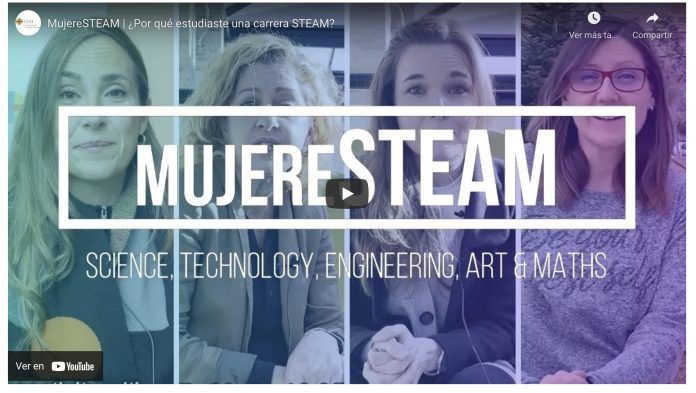
Este 11 de febrero, Día Internacional de la Mujer en la Ciencia, conocemos la historia de cinco profesoras de la ESET que se formaron, trabajan e investigan en ámbitos tradicionalmente masculinos: son mujereSTEAM en la CEU UCH
Sin miedo a las ciencias, ni a las ingenierías, ni a las tecnologías… Sara Barquero, Teresa Ferrer, Paula Aloy, Nuria Rosillo y Lucía Hilario son cinco mujeres que optaron por una carrera de las denominadas STEAM: Science, Technology, Engineering, Arts & Maths. Desde entonces, en su actividad profesional combinan la tecnología, las matemáticas y la productividad, con la creatividad y la dimensión artística y humanística. Hoy son profesoras, investigadores y profesionales en el área de Diseño Industrial y Desarrollo de Productos, en las Matemáticas y en la Robótica, en la Escuela Superior de Enseñanzas Técnicas (ESET) de la CEU UCH.
¿Qué le dirías a tu ‘yo’ del pasado, cuando pensaba en una carrera STEAM?
Tras formarte en STEAM, ¿a qué te dedicas profesionalmente?
¿Es difícil ser mujer en el ámbito STEAM?
Y la historia de Lucía, las Maths… y RoboMaths
La profesora de la CEU UCH Lucía Hilario estudió Matemáticas porque era el sueño de su vida. Pero también una ingeniería, con 80 chicos y 4 chicas en clase. Le apasiona la docencia y por eso ha fusionado su ámbito de investigación en robótica con la enseñanza. Apasionada de las ‘Maths’, ahora desarrolla RoboMaths: un proyecto de robótica para hacer más divertidas las clases de Matemáticas con robots móviles. Lucía es una de nuestrasMujereSTEAM. ¿Conoces su historia?
En su tercera obra conjunta, los autores estudian desde distintas disciplinas, como la jurídica, la política y la comunicativa, la realidad de las mujeres a partir de situaciones y casos de actualidad
Los casos mediáticos de “las manadas”, la figura femenina en series como El cuento de la criada y en anuncios publicitarios o la escasa presencia de las mujeres en los puestos de decisión política, entre los temas analizados.
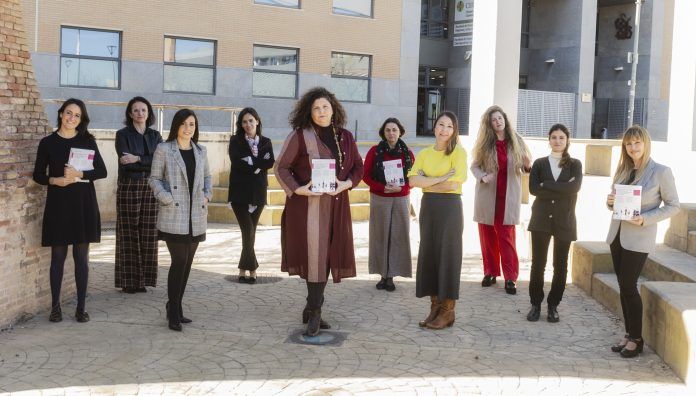
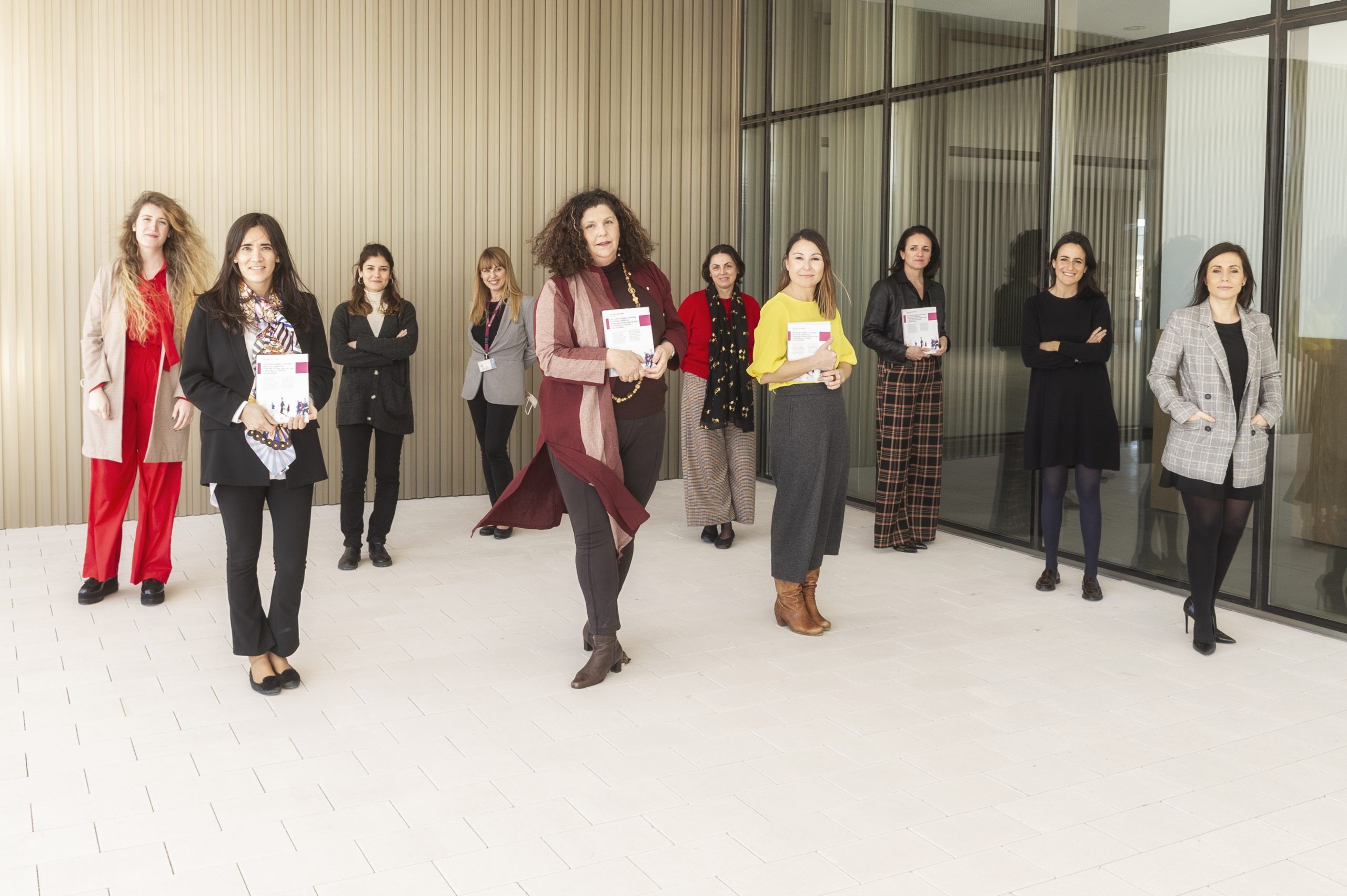
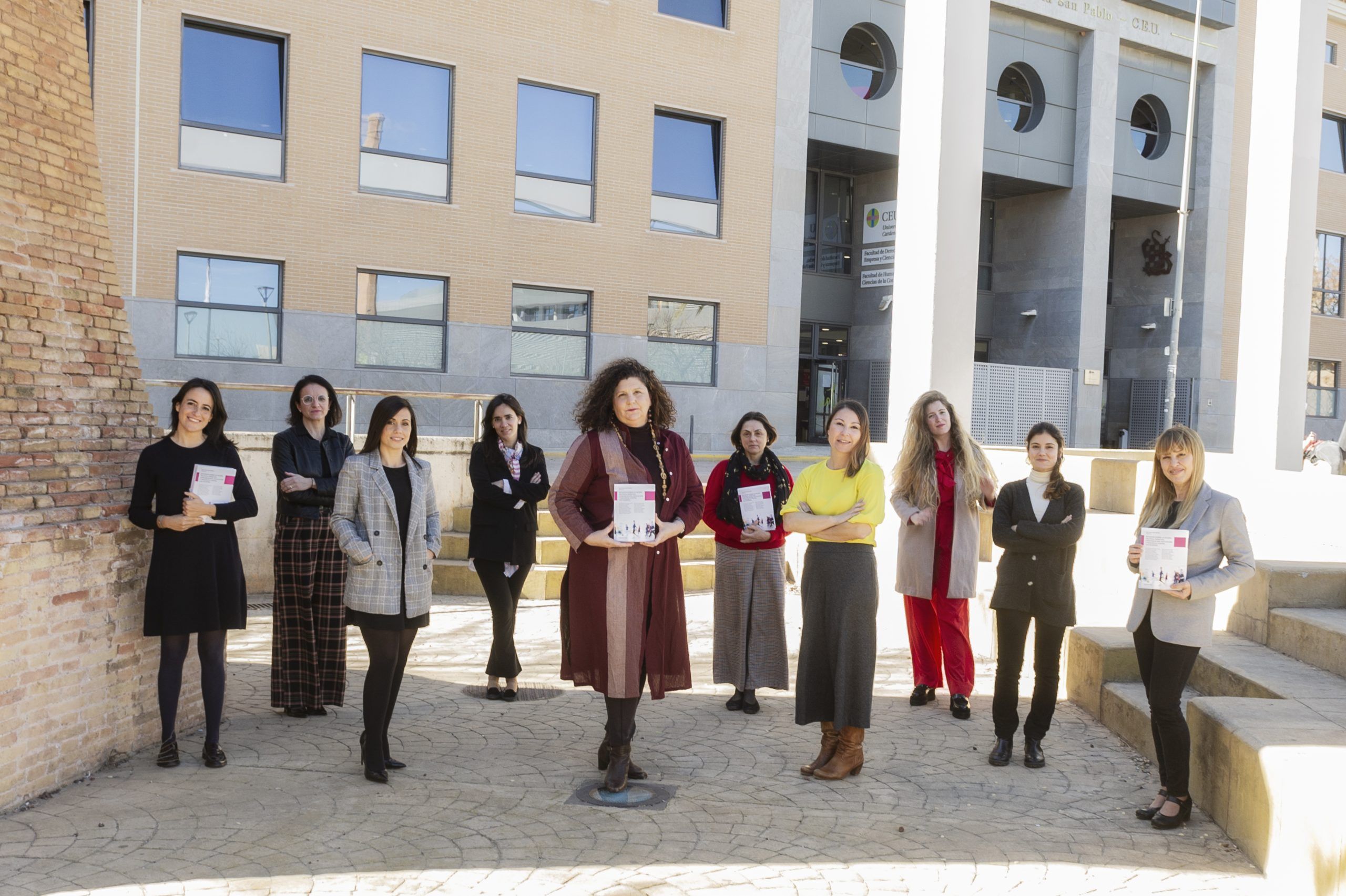
Algunas autoras de «Estudios sobre la mujer». Delante, segunda por la izquierda, la profesora del CEU Ruth Abril.
Valencia, 11-2-2021.- Dieciocho profesores y especialistas formados en la CEU UCH acaban de publicar sus investigaciones más recientes en materia de igualdad y violencia contra las mujeres en la obra Estudios sobre la Mujer, coordinada por la Dra Ruth Abril, asesora de género en esta universidad y especialista en protección internacional de Derechos Humanos.
Partiendo de situaciones de la máxima actualidad, este libro publicado por la editorial Huygens, aborda las formas de violencia contra la mujer y la niña, los tipos penales, la influencia del convenio de Estambul en calificaciones jurídicas recientes, la jurisprudencia del Supremo en torno a la figura de la víctima-testigo y el tratamiento de este tema en los medios de comunicación, la publicidad y el cine, así como las medidas educativas para su prevención desde los centros formativos.
En materia de igualdad, la obra analiza la presencia de la mujer en la esfera política y pública, evaluando su presencia en el Congreso, los Parlamentos autonómicos y en cargos políticos de la administración del Estado en España, así como el sistema de cuotas de igualdad como mecanismo para mejorar su participación en la vida pública.
Partiendo de situaciones de la máxima actualidad, el libro aborda, entre otros, las formas de violencia contra la mujer y la desigualdad en la política y la publicidad
De El cuento de la criada a los casos de “la manada”
Esta obra colectiva analiza los paralelismos del relato distópico El cuento de la criada con la realidad presente y concluye que muchos temas conflictivos que subyacen en esta obra de Margaret Atwood, ya ocupan portadas en los países occidentales: la discriminación y ausencia de derechos de la mujer en las sociedades teocráticas islámicas, la gestación subrogada o la corriente neofeminista que proclama la función materna de la mujer.
Los casos judiciales de “las manadas” y su tratamiento mediático también han sido abordados por los investigadores, que analizan la polémica sobre la primera sentencia del Tribunal Supremo y las obligaciones en materia de derechos humanos consagrados en el Convenio de Estambul, valorando la necesidad de acomodar el Código Penal español a la normativa internacional. Un reto que podría concretarse a partir de la recientemente aprobada Ley Orgánica de garantía de la libertad sexual.
Por su parte, en el ámbito de los medios de comunicación, los expertos concluyen que, a pesar de la evolución positiva en el tratamiento de los casos de violencia contra la mujer, todavía queda camino por recorrer para alcanzar el pleno ejercicio de su responsabilidad social, eliminando, entre otros, “la priorización del espectáculo sobre la información o del clickbait sobre la profundidad”.
La obra aborda, desde una perspectiva multidisciplinar y a partir de la actualidad, la situación de la mujer
La mujer en política y en publicidad: aprobado raso
La obra de los expertos y especialistas formados en la CEU UCH también analiza los datos más recientes de la representación femenina en los puestos de decisión política. Y concluye que, si bien en los primeros niveles se proyecta una imagen de igualdad, la realidad es que conforme se desciende en el escalafón en la Administración, desaparece este equilibrio.
Un aprobado justo en representación política que se repite también en el ámbito publicitario. Y es que, según se desprende del análisis de campañas recientes, continúan perpetuándose contenidos que inciden en la desigualdad, aunque en algunos casos se realice de un modo encubierto.
El equipo de investigadores, en 2016, presentando las conclusiones de otra de sus obras, «Mujer e Igualdad»
Glosario y equipo investigador
El libro se completa con un glosario en materia de igualdad, que explica, con rigor, y contextualizándolos, términos que forman parte del debate público, como ablación, abuso sexual, brecha de género, corresponsabilidad, diversidad de género, feminismo, identidad de género, mansplaining y perspectiva de género, entre muchos otros.
Estudios sobre la mujer es el tercer libro que dirige la profesora Ruth Abril junto a este equipo de expertos, compuesto mayoritariamente por mujeres, interesados en abordar la situación de la mujer desde diferentes áreas de conocimiento.
En él han participado profesores de la CEU UCH y especialistas formados en ella y que colaboran en sus líneas de investigación en esta materia, como Ana María de la Encarnación, Rosa Estevan Hernaiz, Lara Esteve Mallent, Rosario García-Bellido, Mª Rosario García Cubells, Nuria Hernández García, Elena Juaristi Besalduch, Rocío López García-Torres, Joaquín Marco Marco, Blanca Nicasio Varea, Rosa Pascual Serrats, Marta Pérez Gabaldón, Elia Saneleuterio, Susana Sanz Caballero, Begoña Siles Ojeda, Mónica Soria Moya y Ainhoa Uribe Otalora.
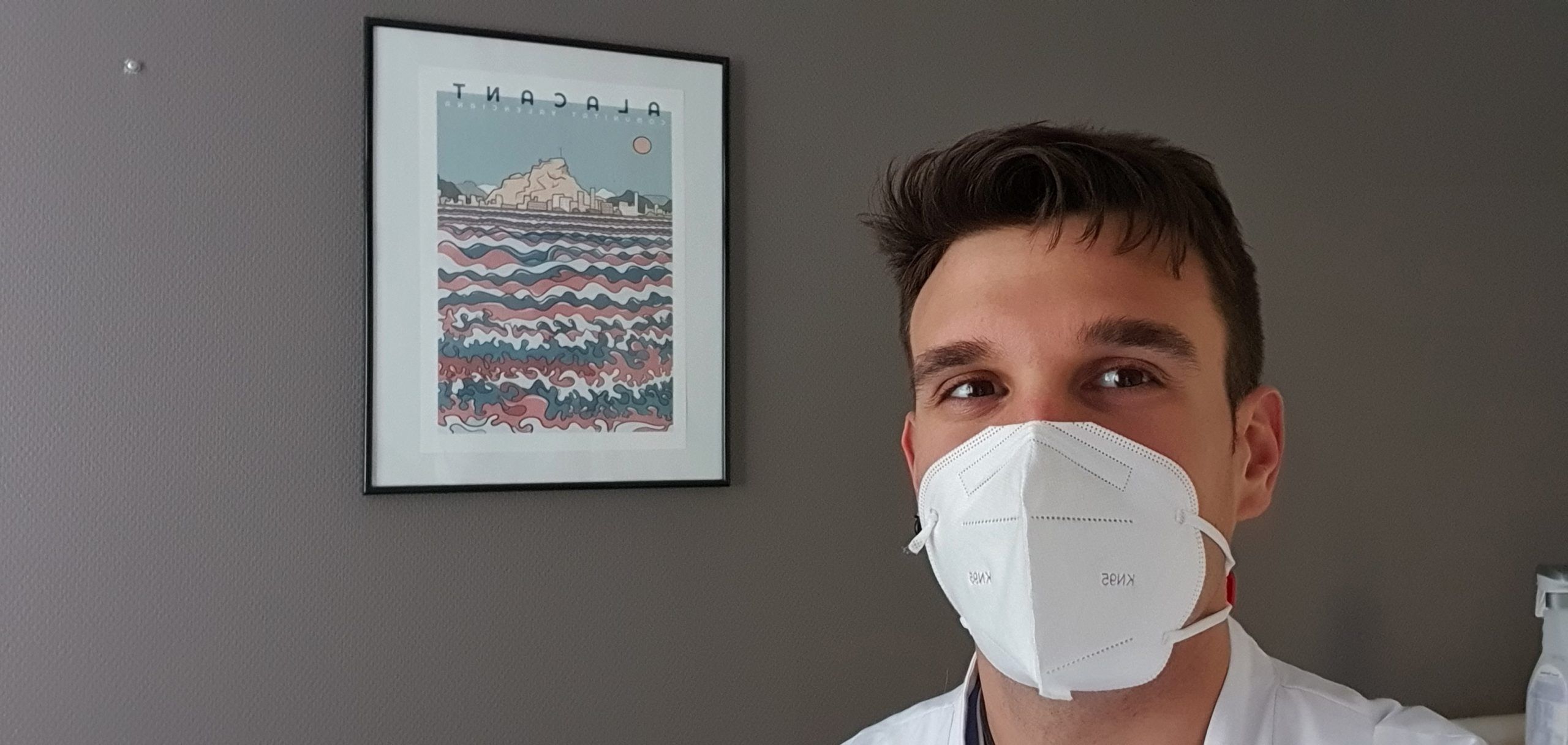
Attiré par la langue, la culture et pour vivre une expérience internationale, Manu Hernández, ancien étudiant de la UCH-CEU d’Elche, a commencé à travailler il y a deux ans comme kinésithérapeute en France.
Pour ce jeune homme originaire d’Alicante, la valeur différenciatrice dans son travail est la formation holistique qu’il a eue au CEU, dans la relation avec le patient, “ainsi que la persévérance dans la recherche de la possible cause de la pathologie”.
Manuel Hernandez Chica a obtenu son diplôme de Kinésithérapie à l’Université CEU Cardenal Herrera d’Elche en 2018, et la même année, il est parti travailler en France. Depuis, ce jeune homme originaire d’Alicante, a exercé dans différents hôpitaux et cliniques privées. Ce n’est pas nouveau pour lui puisque durant ses études, il a effectué certains stages pratiques dans différents services, dans des villes françaises. Il travaille actuellement au CRF de Montrodat, à Millau, “entouré de montagnes et de brebis, près du village où l’on fait le fromage Roquefort ». Il fait partie d’une équipe multidisciplinaire composée de médecins, de kinésithérapeutes, d’ergothérapeutes et d’orthophonistes.
Bien qu’il ait décidé d’aller travailler en France, sa ville natale lui manque.
Vous avez toujours voulu faire des études de kiné ou ce fut pour une autre raison ?
Ce fut une décision spontanée. J’ai toujours été attiré par la profession, mais ce n’était pas ma passion. J’ai commencé une double licence en Soins Infirmiers et Kinésithérapie, et j’ai fini par choisir la kinésithérapie parce ça représentait plus la vision que j’avais de la relation avec le patient et pour les possibilités que vous offrent ces études.
Pourquoi avez-vous décidé de faire vos études au CEU d’Elche ?
Parce que c’était la seule université qui proposait cette double licence et parce que j’avais eu de bons échos.
Comment se sont passés vos quatre ans à l’Université d’Elche ?
Très bien, je n’ai pas vu le temps passer. Je me suis intégré dès le début, les professeurs et mes camarades m’ont beaucoup aidé.
Qu’est-ce que vous retenez de vos études dans cette université ?
Ce que j’ai appris, sans aucun doute. Depuis que j’ai terminé mes études et que j’ai vu le reste des personnes qui ont fait les mêmes études que moi, j’ai compris que la formation reçue au CEU est très complète. Et surtout grâce à la conception holistique du patient, ainsi que la persévérance dans la recherche de la possible cause de la pathologie.
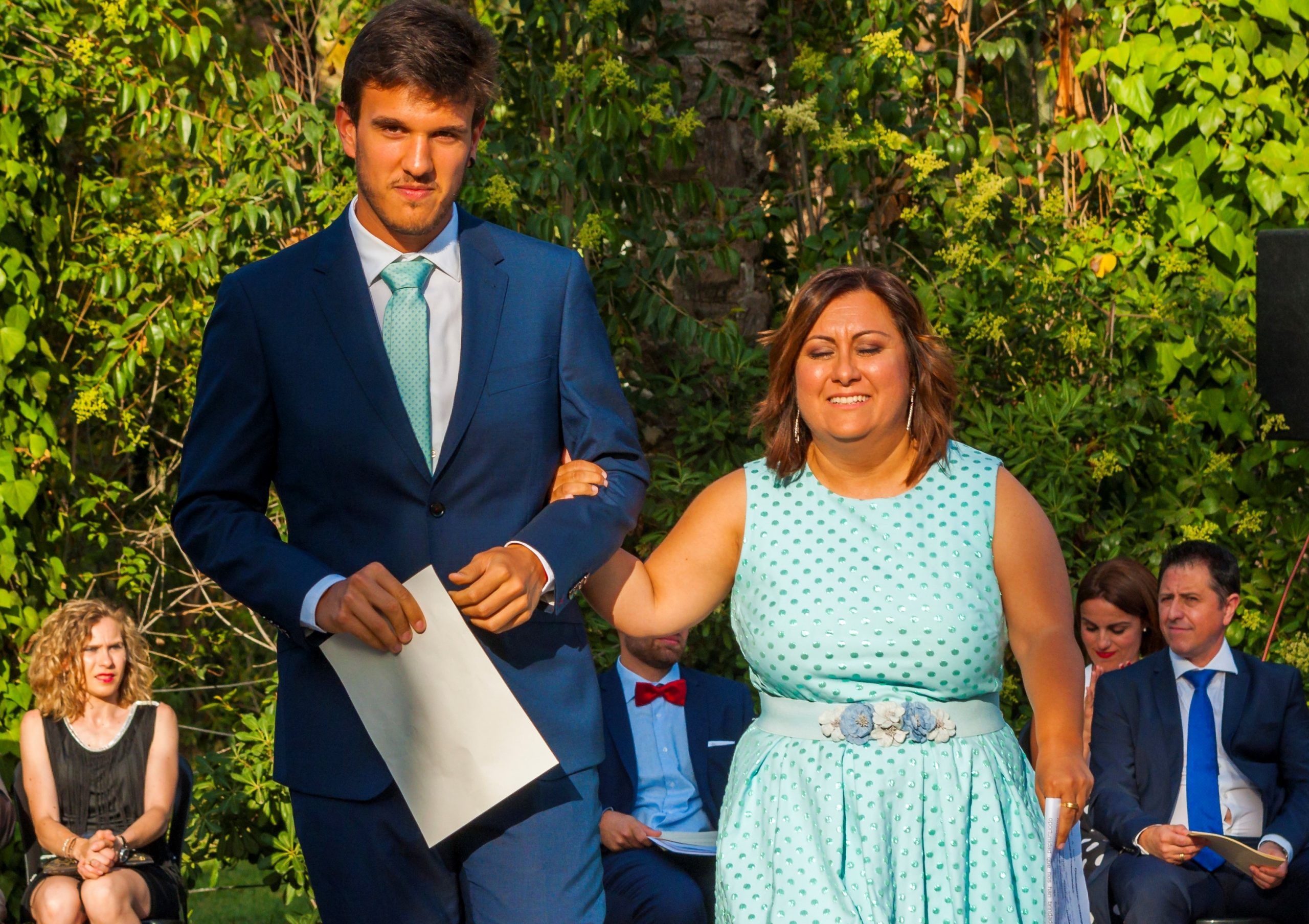
Manu Hernández durant la cérémonie de remise des diplômes, où il a été élu représentant de la promotion
Être kinésithérapeute en France
Où avez-vous fait vos stages pendant vos études ?
Durant les premières années, j’ai fait des stages volontaires dans deux cliniques à Alicante : à la clinique Silvia Martínez à Elche, et à la clinique GRAU d’ Alicante. L’année suivante, avant de terminer, j’ai décidé de tenter ma chance en France. J’y ai travaillé dans différents services : en pédiatrie à l’Hôpital Lenval de Nice, en musculosquelettique au CFR de Montrodat et à la clinique Coudert-Ribes à Mende, en cardio-respiratoire au SSR d’Antrenas, en neurologie au centre de rééducation à Vallauris et en gériatrie à la clinique La Pagerie de Marseille.
Pourquoi pensez-vous que ce qu’on vous a enseigné au CEU vous est utile dans votre profession actuelle ?
Parce qu’on nous a aussi enseigné les valeurs qui nous servent pour la relation et la communication avec les patients.
Quels sont vos projets professionnels pour le futur ?
J’aimerais rentrer en Espagne le plus tôt possible car même si j’ai trouvé un travail stable, ma ville me manque, le climat… et surtout la famille et les amis.
Panorámica de las instalaciones del CRF de Montrodat
Manu, en la clínica CFR de Montrodat, donde trabaja como fisioterapeuta
Attracted by the language, culture and the opportunity to gain some international experience, Manu Hernández, who studied on CEU-UCH’s Elche campus, has been working as a physiotherapist in France for two years.
He sees the comprehensive training in dealing with patients that he received at CEU as the difference, “and the determination to find out what is really causing the problem for each patient”
Manuel Hernandez Chica graduated in Physiotherapy at the CEU Cardenal Herrera University’s Elche campus in 2018 and he moved to France to work as a physiotherapist that same year. Since then, this Alicante native has worked in a range of hospitals and private clinics. It’s not new to him either, as he undertook a variety of placements at healthcare institutions in French cities while studying for his degree. He currently works at CRF de Montrodat, in Millau, “surrounded by mountains and sheep, close to where they make Roquefort”. And he’s a member of a multidisciplinary team made up of doctors, physiotherapists, occupational therapists, adapted physical activity experts and speech therapists.
Although he decided to up sticks and work as a physio in France, Manu still misses Alicante, his hometown.
Did you always want to be a physiotherapist or did you choose the degree for other reasons?
It was a spur-of-the-moment decision. I was interested in the profession, but it wasn’t something I was passionate about. I started out on the Dual Degree in Nursing and Physiotherapy, but I ended up concentrating on physiotherapy because it seemed to fit in better with how I saw my relationship with patients and also because the different paths the degree takes you down.
Why did you choose to study Physiotherapy at CEU’s campus in Elche?
Because it was the only university which offered the dual degree combination and I’d because I’d heard great things about it.
What were your four years at the University in Elche like?
It was a great experience because the four years just flew by. I felt really at home at the University from the very beginning – the help I got from the lecturers and the other students was a huge part of that.
What was the best thing for you about studying at the University?
What I learnt, most definitely. After graduating and seeing what other people with the same qualification had learnt, I realized that the education I received at the CEU was really comprehensive. The main reason for that was the holistic vision of the patient that was instilled in us, and the determination to find out what is really causing the problem for the patient.
Manu Hernández during the gradation ceremony, in which he was chosen as the representative for his year.
Working as physiotherapist in France
Where did you do placements during your degree?
In the early years, I did voluntary placements at two clinics in Alicante. I spent some time at Silvia Martínez’s clinic in Elche, and then also at the GRAU clinic in Alicante. The following year, before I graduated, I decided to try out working as a physiotherapist in France. I spent several weeks doing different rotations across different services. I was in paediatrics at the Hospital Lenval in Nice, musculoskeletal physiotherapy at the CFR de Montrodat and the private Coudert-Ribes clinic in Mende, the cardio-respiratory department at the SSR in Antrenas, neurology at the rehabilitation centre in Vallauris, and geriatrics in the La Pageraie clinic in Marseilles.
Why do you think that what you were taught at CEU is so valuable for your career as a physiotherapist now in France?
Because, in addition to what you learn in lectures about physiotherapy, we were also taught about the values we need in order to be able to treat people in the more personal sense.
What career plans do you have?
To get back to Spain as soon as possible. Despite the fact that it’s easier to build a stable career here, I really miss home, the weather, but especially my family and friends.
Panoramic view of the CRF de Montrodat facilities.
Atraído por el idioma, la cultura y vivir una experiencia internacional, Manu Hernández, alumni de la UCH-CEU de Elche, empezó hace dos años a trabajar como fisioterapeuta en Francia
Para este alicantino, el valor diferencial en su trabajo es la formación holística que recibió en el CEU en el trato con el paciente, “así como la perseverancia en la búsqueda de la posible causa de la patología”
Manuel Hernandez Chica se graduó en Fisioterapia en la Universidad CEU Cardenal Herrera de Elche en 2018 y ese mismo año se fue a trabajar como fisioterapeuta en Francia. Desde entonces, este alicantino ha desarrollado su trabajo en diferentes hospitales y clínicas privadas. Algo que no es nuevo para él, ya que algunas prácticas durante la carrera también las realizó en diversos servicios sanitarios de ciudades francesas. Actualmente trabaja en el CRF de Montrodat, en Millau, “rodeado de montañas y ovejas, al lado de donde se hace el Roquefort”. Y lo hace integrado en un equipo multidisciplinario formado por médicos, fisioterapeutas, ergoterapeutas, maestros APA y logopeutistas.
Aunque se decidió por ir a trabajar como Fisioterapeuta en Francia, Manu añora su Alicante natal
¿Siempre has querido estudiar fisioterapia o fue una decisión por otras razones?
Fue una decisión espontánea. La profesión me llamaba la atención, pero no era mi pasión. Empecé el doble grado de Enfermería y Fisioterapia, pero finalmente terminé eligiendo fisioterapia porque coincidía más con mi visión del tratamiento con el paciente y con las posibilidades que te abre la carrera.
¿Por qué decidiste estudiar en el CEU de Elche la carrera de Fisioterapia?
Porque era la única Universidad que disponía de este doble grado y porque había oído hablar muy bien de ella.
¿Cómo han sido estos cuatro años en Elche, en la Universidad?
La experiencia ha sido muy buena puesto que los 4 años no los vi prácticamente pasar. En la universidad me sentí súper integrado desde el momento cero, los profesores, y todos mis compañeros me ayudaron enormemente a que eso sucediese.
¿Qué es lo que más valoras de tus estudios en esta universidad?
Lo aprendido, sin dudarlo. Desde que salí y vi al resto de personas que han estudiado tu misma carrera, me di cuenta que la preparación que había recibido en el CEU fue bastante completa. Gracias, sobre todo, a la concepción tan holística que nos enseñaron a tener sobre el paciente, así como la perseverancia en la búsqueda de la posible causa de la patología.
Manu Hernández durante el acto de graduación, en el que fue elegido como alumno representante de la promoción
Trabajar como fisioterapeuta en Francia
¿Dónde has hecho prácticas durante la carrera?
En los primeros años realicé prácticas voluntarias en dos clínicas de Alicante. Un tiempo en la clínica Silvia Martínez en Elche, y otras en la clínica GRAU de Alicante. Al curso siguiente, antes de terminar, ya me decidí probar como fisioterapeuta en Francia. Aquí hice varias semanas de rotaciones, en diferentes servicios. Estuve en Pediatría en el Hospital Lenval en Niza, Musculosquelético en el CFR de Montrodat y la clínica privada Coudert-Ribes en Mende, Cardiorrespiratorio en el SSR de Antrenas, Neurología en el centro de rehabilitación en Vallauris y Geriatría en la clínica La Pageraie en Marseille.
¿Por qué crees que lo que te han enseñado en el CEU te está sirviendo para tu profesión actual como fisioterapeuta en Francia?
Porque, además de lo aprendido en el aula en relación con mi profesión, también se nos ha enseñado unos valores que nos sirven para tratar a las personas de una manera muy personal.
¿Cuáles son tus planes de futuro profesionales?
Volver a España lo antes posible. Pese a la facilidad de encontrar una estabilidad profesional que existe aquí, se echa muchísimo de menos la tierra, el clima,… Pero, sobre todo, la familia y los amigos.
Panorámica de las instalaciones del CRF de Montrodat
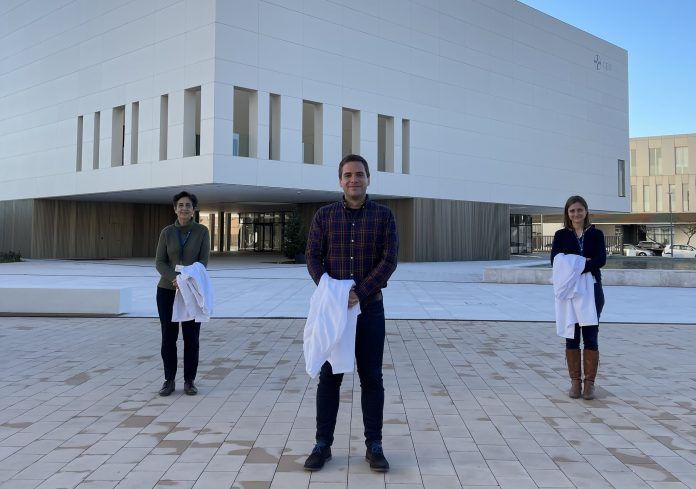
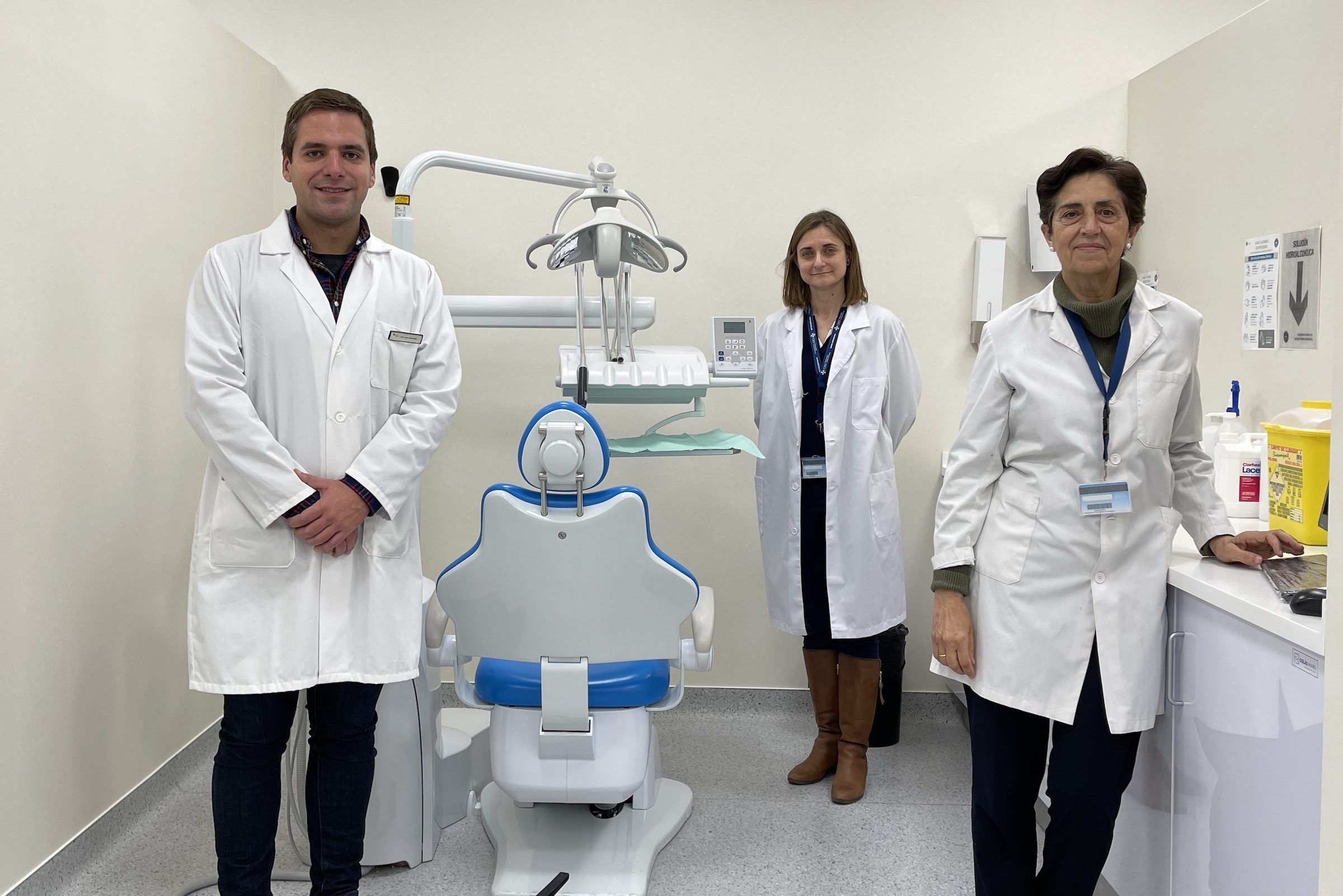
Isabel Guillén, Javier Fernández Aguilar y Mar Jovani, autores del estudio sobre ansiedad en el dentista y consumo de analgésicos.
The greater the level of anxiety when visiting a dentist, the greater the need to take painkillers for the pain resulting from a tooth extraction. This link has been proven by Javier Fernández Aguilar, Mar Jovani andIsabel Guillén, researchers of the CEU Cardenal Herrera University (UCH CEU) of Valencia, along with María Teresa Sanz, from the University of Valencia (UV). In their study, which has just been published in Scientific Reports, has analyzed the levels of anxiety that the patient has before a tooth extraction, along with several physiological parameters, in order to establish their correlation with the greater need for subsequent pain relief treatment.
Researchers used the ‘Corah’ dental anxiety scale, one of the most commonly used on an international level, on a total 185 patients before undergoing a tooth extraction. These patients filled out a questionnaire in the waiting room to ascertain their anxiety level prior to the procedure, in accordance with the following scale: non-existent, moderate, high or severe. Furthermore, two physiological parameters were assessed for all patients, before and after the dental intervention: blood pressure and heart rate. Other variables such as age, sex, prior painkiller intake, the type of local anesthetic used or the duration of the extraction. Following the intervention, each patient received a form to note whether they had to take medication for the pain, such as paracetamol 650 mg or ibuprofen 400, and for how many days, or not.
Isabel Guillén, Javier Fernández Aguilar y Mar Jovani, autores del estudio sobre ansiedad en el dentista y consumo de analgésicos.
More anxiety before, more painkillers after
The gathering of cases for 15 months has made it possible to prove the relationship between the levels of anxiety expressed by the patients and their heart rates and blood pressure before and after the dental intervention. The study also confirmed that the patients with higher levels of anxiety leaned more towards ibuprofen as an anti-inflammatory to decrease the pain. Patients with low or no anxiety tended to take paracetamol or no painkillers.
According to Odontology professor of the CEU UCH, Javier Fernández Aguilar, whose doctoral thesis includes the results of the article published in Scientific Reports, «the fear and anxiety of patients who go to a dental clinic are part of day-to-day life. It is believed that, in western countries, one in seven patients has high anxiety levels when going to the dentist. In the most extreme cases, this anxiety is considered a phobia. We have now confirmed that this emotional state of anxiety, at its highest levels, has direct effects on the physiological state of the patient and also on the treatment required afterwards to deal with the pain.»
Decrease anxiety in the practice
The study shows that patients with high and severe levels of anxiety are the ones who took the most painkillers after the tooth extraction, especially during the first 24 hours following the intervention. «These results lead us to believe that if we can decrease the level of anxiety of a patient before a tooth extraction, we can also decrease or erase the consumption of painkillers, especially anti-inflammatories such as ibuprofen, with the subsequent benefits that this has for the overall health. Furthermore, 650 mg doses of paracetamol and 400 mg doses of ibuprofen were selected with the goal of achieving the greatest pain-killing benefit with the lowest dosage possible. This is very important for the long-term health of the patients,» says lecturer Fernández Aguilar.
The results of this study are part of the doctoral thesis of lecturer at the Department of Odontology of the CEU UCH, Javier Fernández Aguilar, directed by Vice-Decan of the bachelor’s degree Mar Jovani, and Isabel Guillén, coordinator of the doctoral program in Translational Medicine of the CEU’s CEINDO International Doctoral Studies School, with the collaboration of María Teresa Sanz, from the Department of Mathematics of the UV, for the statistical treatment of the data.
“Our priority as teachers and educators is to ensure that our pupils are happy,” says Claudia Gilabert, a student in Primary Education, who took part in an international project with Plymouth Marjon University
Claudia Gilabert Vives is studying Primary Education on CEU’s Elche campus. During this academic year, Claudia and other second-year Primary Education (Magisterio) students have taken part in a COIL project with students from Plymouth Marjon University. Education in Spain and the UK was the focus of this international initiative, in which students and lecturers from both universities have learnt about and compared the two educational systems. The main focus has concerned the effect of the pandemic on pupils’ learning, but these online sessions have also explored both the influence of family life on development and social problems caused by COVID-19. Claudia has worked on the comparison of education in Spain and the UK during the pandemic.
Why did you decide to participate in this international project?
The English teacher, Linda Palfreeman, put the idea to us and I thought it would be a good way of practising a foreign language and of meeting new people.
How do you think this project can help you in terms of your future career?
The factthat I know more about the way things are done in the UK could help me, because, if I go there to work in the future, I’ll know what to do.
What impact is the pandemic having on children’s educational development?
As I see it, the pandemic’s having a major impact, as children need to interact with and see other children of their own age. And right now, with all the safety procedures, things are a bit difficult: if they aren’t happy, it’s difficult to get them to focus on their classwork.
One of the issues that you have worked on in this project is the influence of family life on children. What have you all found out?
Family life has a very great impact on children. Each family has its own habits and ways of thinking and you can see that in school. The task of educating children is shared by parents and teachers. A good family-school relationship is essentialto enable the children to develop in the right atmosphere and to ensure that they’re not receiving contradictory messages from the twosources of education.
Future educational models
The experts say that this health crisis will see the emergence of some very different educational models. Where do you think education is headed in the short to medium term?
I think that in the end the direction of education will be decided by the relevant authorities. I suppose that we’ll see a much more personal kind of education than before – it won’t be so general. Children will be given greater importance, as they’ve shown great maturity in response to this crisis, a maturity lacking in many adults.
The Spanish government has passed a law enabling schoolchildren to pass onto the next study year, regardless of the number of subjects they have failed. The new law also gives the educational authorities the power to “modify the criteria concerning assessment, promotion to the next year, and graduation” for primary, secondary, pre-university studies and vocational training “in order to adjust to the situation caused by the pandemic”. What do you think about this?
I’m not against it. In order to pass on to the next year, pupils need to meet certain requirements and a panel will meet to decide whether they do. I don’t think that’s a bad thing, because sometimes it’s worse if a student has repeated a year three times, doesn’t want to be in school and just ends up disrupting the class for the ones who do want to be there. I think that in cases like that the pupil should be allowed to pass on to the next year, so that they can study what they want or, if not, go and out and find a job if that’s what they want. In the end, our priority as teachers and educators is to ensure our pupils are happy regardless of their grades or what they’re studying. Right now, the Spanish education system places an emphasis on grades rather than happiness and I don’t like it.
When you graduate, what do you want to do career-wise?
I want to be a primary teacher. I’d like to teach my mother tongue, Valencian, but also English or Spanish, as I really like languages in general.
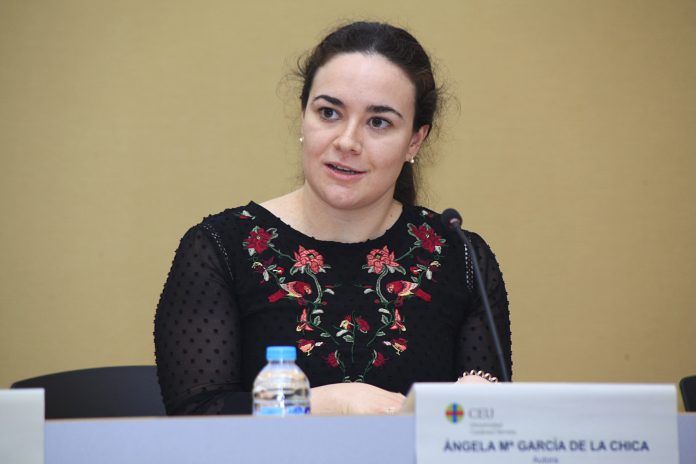
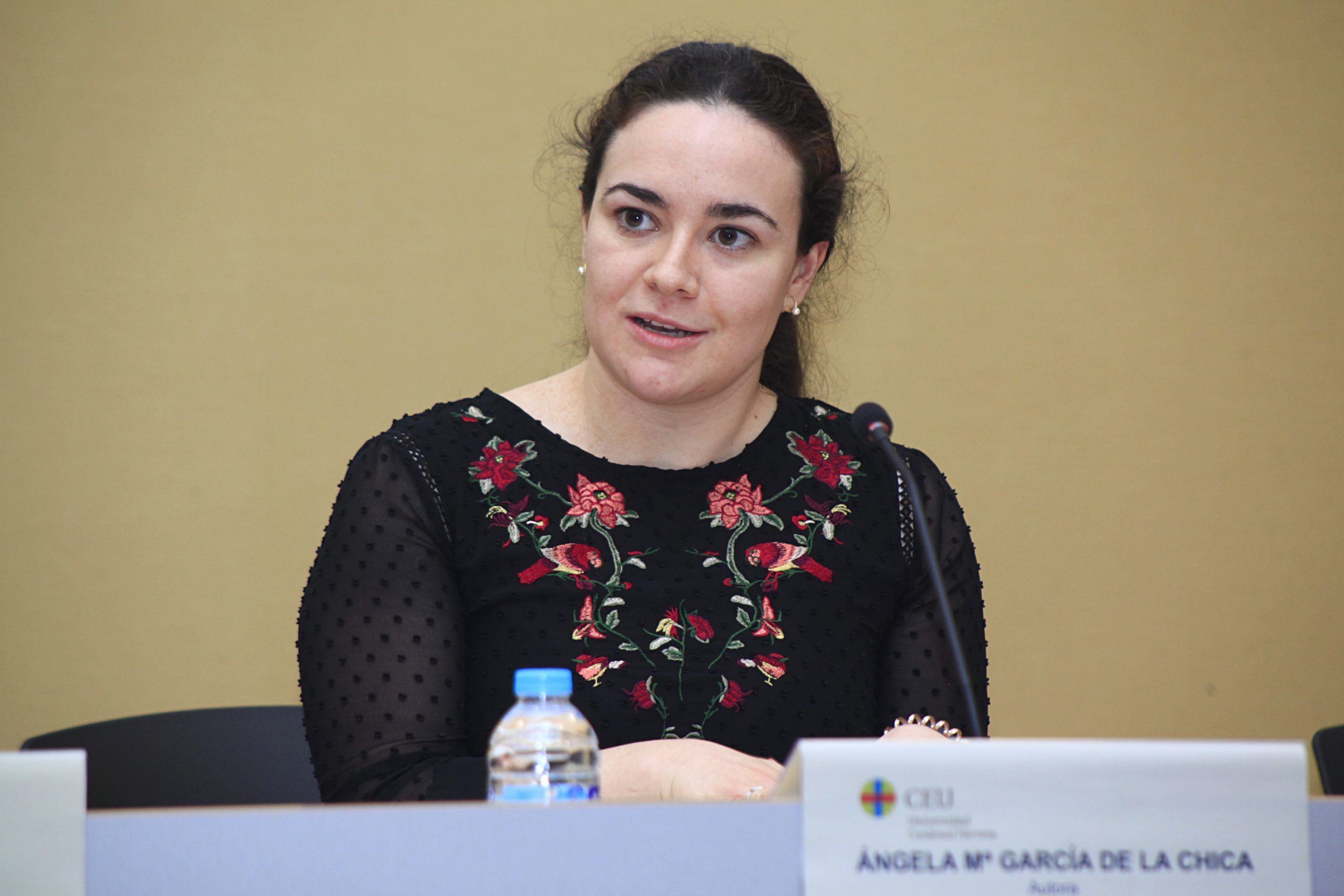
Ángela María García de la Chica is a member of our first group of Medicine graduates trained at the CEU Cardenal Herrera University’s Valencia campus. Excited and committed to helping her patients, this trainee gynaecologist has joined the medical profession in amidst a pandemic.
“The feeling you get when you know a patient is satisfied with your work makes the whole journey worthwhile”
In this interview, she shares with us her experience of starting her specialty training as a gynaecologist, “the specialty that concerns a woman’s whole lifespan”.
What has it been like to join the medical profession at such a difficult time?
It’s been bittersweet, because, on the one hand, this moment of starting my career as a doctor was something I’d been thinking about since I started my degree and so to finally be able to start was a dream come true. But then, on the other hand, the delay in the assignation of a place together with the circumstances caused by the pandemic led to some difficult times at a personal level due to the uncertainty.
What’s your day-to-day work like as a MédicoInternoResidente [resident doctor undergoing specialty training] in gynaecology at the hospital in Alcalá de Henares?
It depends on the rotation I’m on, but, in general, it begins with the shift handover briefing, where we’re told about the admissions and births that have taken place on the previous shift, as well as any interesting cases that have come in over the previous 24 hours.Then the session continues with presentations from more senior doctors or other residents. After that we begin the shift for the rotation we’re on. So far, I’ve done rotations in pathological anatomy, dermatology, the delivery room and a gynaecology outpatients’ clinic.
Are you seeing an increase in pressure on your service due to the number of COVID-19 cases?
Yes, we are. On the one hand, you see it in the fact the only operations in theatre are emergencies or operations that can’t be delayed, such as for cancer patients, and so other operations are being postponed. We’re also doing a lot of telephone appointments to avoid so many patients from physically coming to the healthcare facilities.
What is it that we’ve done wrong if the ICUs are now full again?
In my opinion, I think that after the initial lockdown period, people have let down their guard. And that has meant that the safety measures haven’t been followed, allowing the virus to keep on spreading.
I imagine that the most important thing now is for the vaccination programme to be accelerated. Have you been vaccinated yet?
Yes, I’ve had the first dose of the vaccine. More importantly than accelerating vaccinations, I think that the most important thing is to maintain social distancing, wear a mask, avoid social events and follow good hygiene procedures. In the end, vaccinations will provide us with immunity, but it won’t stop the spread of the virus yet.
Commitment to patients
Ángela, what do you most like about being a doctor?
The feeling you get when you know a patient is satisfied with your workis what makes the whole journey worthwhile.
Why did you choose to specialize in gynaecology?
Because it’s a very broad specialty.Every day is different, because one day you’re dealing with gynaecology and obstetrics outpatients, the next you’re in the operating theatre, and then the next you’re in the delivery room. And then within the specialty, there are subspecialties: functional gynaecology, pelvic floor, reproduction, gynaecological oncology, and so on. And it’s also the specialty which concerns a woman’s whole lifespan, from menarche to the menopause, taking in pregnancy on the way.
You’re one of the first doctors to graduate from CEU’s Valencia campus. What memories do you have of studying at the University?
I’ve got very fond memories of it even though I had to work so hard there, both in lectures and as a student assistant in the laboratories.
“The fact that I had great classmates and lecturers who were willing to listen to me and help me made it easier to fit right in”
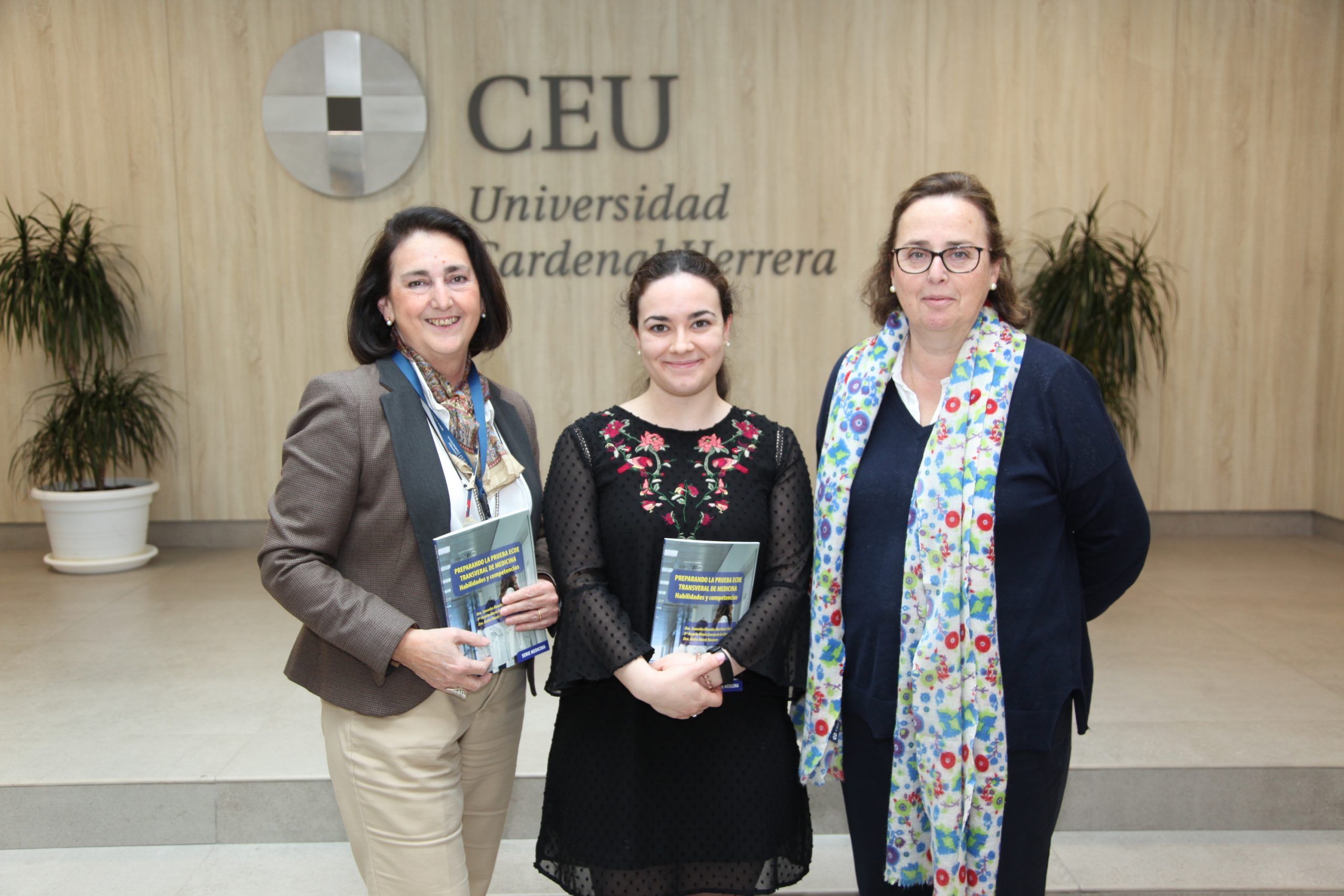
Last March, you and the lecturers Sonsoles Musolesand Belén Merck, presented the book entitled Preparando la prueba ECOE Transversal de Medicina, aimed at Medicine students preparing for the final practical ECOE examination. How did the opportunity to collaborate with these lecturers come about?
When I was preparing for the ECOE exam, I couldn’t find any materials which would, on the one hand, help me to revise for different areas and, on the other, give me some guidance as to how the assessment of practical skills would take place. So, because I was a student assistant for the 6th year Practicum course, I spoke to the course coordinators and we start to flesh out an answer to the problem.
With the CEU UCH lecturers Sonsoles Musoles and Belén Merck, at the presentation of the Manual ECOE.
So, the book is perfect for those Medicine students preparing for this key skills test. In your opinion, what are the defining characteristics of healthcare professionals?
You have tolove your work. You have to feel a vocation for medicine, it’s a long degree and you have to keep up to date with the latest developments. That’s why keeping that motivation to help your patient and provide the best possible care will ensure that, even if you’re not very sure what your patient’s pathology is, you’ll consider the case carefully and find the right solution for the problem.
These are some difficult weeks ahead for the COVID-19 situation. Any advice?
Pay attention to the recommendations and be responsible.
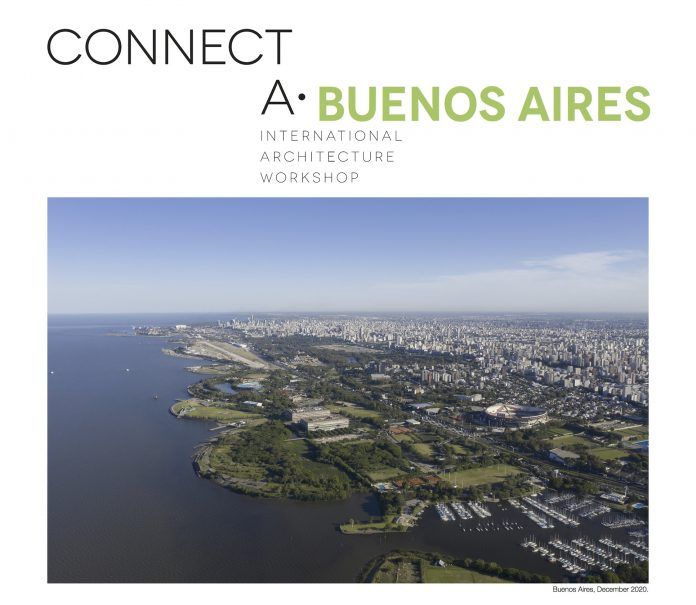
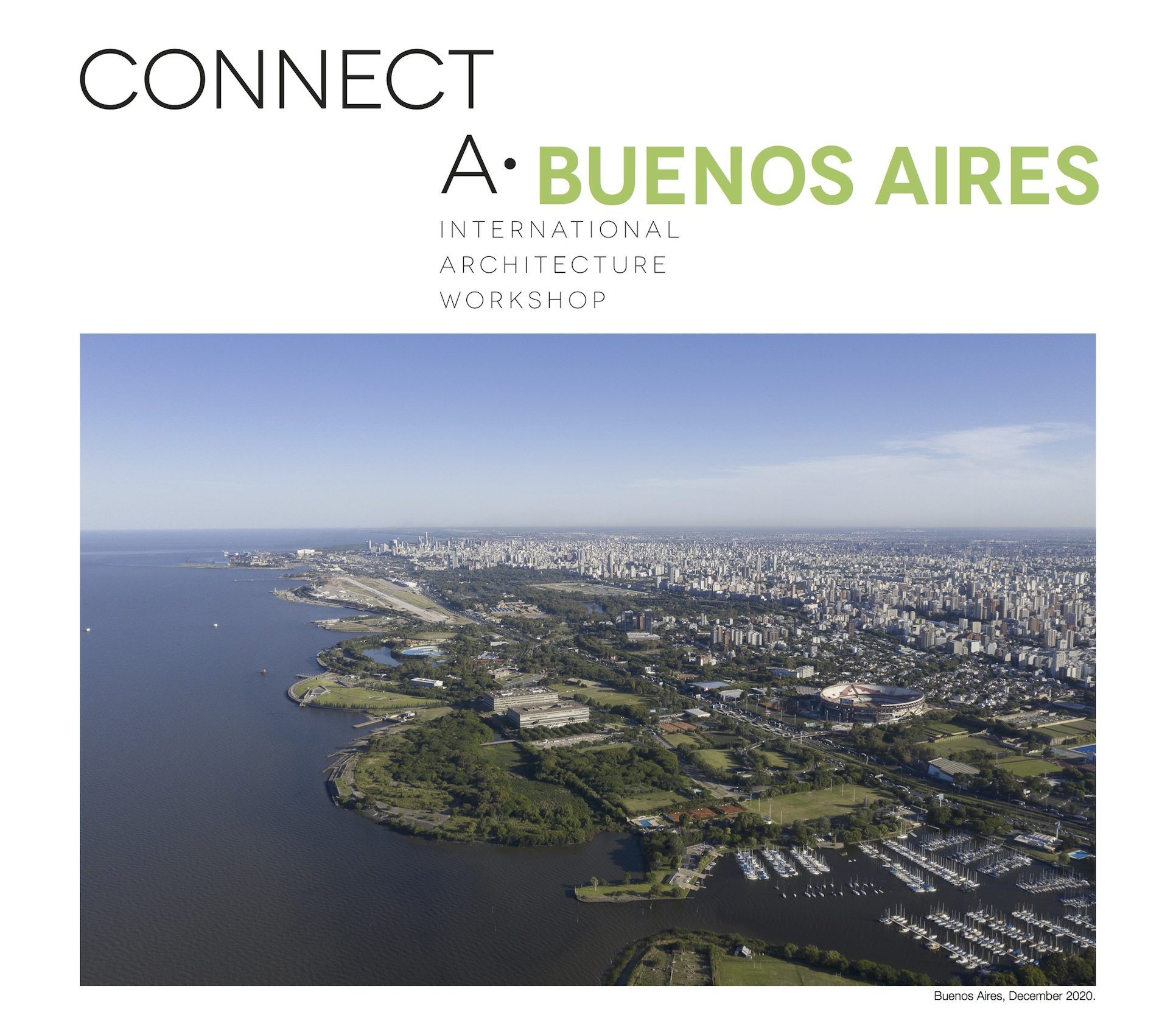
Cartel del workshop internacional ConnectA, que la CEU UCH dedica este año a la ciudad de Buenos Aires, con la participación de arquitectos argentinos de reconocido prestigio internacional.
En la cuarta edición de este workshop internacional, los estudiantes de Arquitectura de la CEU UCH están dirigidos por los arquitectos argentinos Javier Agustín Rojas, Ricardo Fernández Rojas, Martín Torrado y el estudio Adamo Faiden, uno de los cien mejores del mundo en 2019, según la revista italiana Domus
Cartel del workshop internacional ConnectA, que la CEU UCH dedica este año a la ciudad de Buenos Aires, con la participación de arquitectos argentinos de reconocido prestigio internacional.
La adaptación de los Objetivos de Desarrollo Sostenible (ODS) a la arquitectura de una gran capital como Buenos Aires es el desafío internacional en el que trabajarán desde esta semana los estudiantes de Arquitectura de la CEU UCH. Para el desarrollo de sus propuestas, contarán con la dirección de los profesionales de uno de los estudios de arquitectura de mayor prestigio en Argentina: Adamo Faiden, seleccionado entre los cien mejores estudios de arquitectura del mundo por la revista italiana Domus en 2019. Los arquitectos argentinos Martín Torrado, Ricardo Fernández Rojas y Javier Agustín Rojas dirigen esta semana las sesiones online de la cuarta edición del seminario internacional ConnectA de la CEU UCH, que en curso anteriores ha planteado diversos retos a los estudiantes sobre las ciudades de Berlín, Copenhague y Oporto.
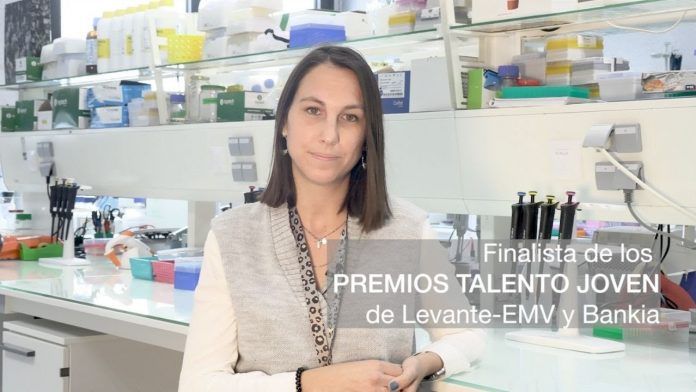
Elle est vétérinaire, spécialiste en virologie moléculaire et professeure du Département de Pharmacie de l’Université CEU Cardenal Herrera. La pandémie de Covid-19 a amené Consuelo Rubio Guerri à concentrer son travail sur la crise sanitaire mondiale causée par le coronavirus SARS-CoV-2. La création d’un test PCR low-cost, l’un des projets sélectionnés par le Système d’Innovation et de Recherche de la région (Sistema Valenciano de Innovación e Investigación, a reçu des fonds de L’Agence de l’Innovation de la région de Valence (Agencia Valenciana de la Innovación), dans le cadre de l’urgence sanitaire contre la Covid-19. Consuelo Rubio fait partie des 4 finalistes dans la catégorie scientifique des Premios Talento Joven 2021 organisés par Levante-EMV et Bankia.
She’s a qualified veterinarian, a specialist in Molecular Virology and a lecturer at the Department of Pharmacy at the CEU Cardenal Herrera University. The COVID-19 pandemic inspired Consuelo Rubio Guerri to focus on the global health crisis caused by the SARS-CoV-2 coronavirus. Her design of a low-cost PCR test attracted funding from the regional innovation agency, the Agencia Valenciana de la Innovación, and was selected by the regional research and innovation system, the Sistema Valenciano de Innovación e Investigación, as part of the response to the COVID-19 emergency. Now, Consuelo Rubio is one of four people shortlisted for an award in the science category of the Premios Talento Joven 2021, organized by Levante-EMV and Bankia.
futuras terapias de las células madre contra el cáncer
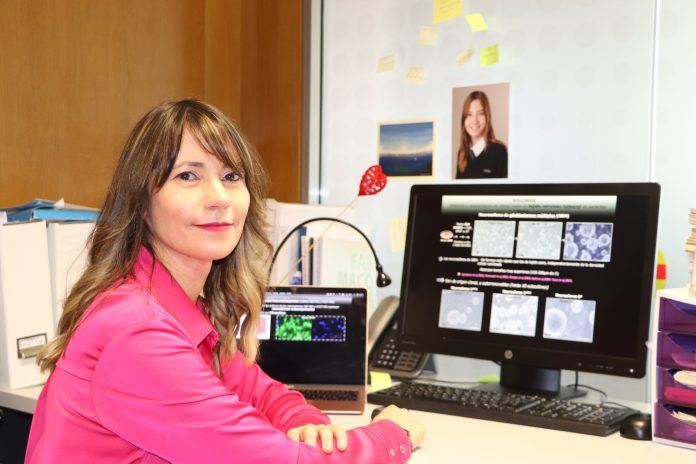
Esther Mancheño Maciá, investigadora del CEU-UCH en Elche, analiza cómo el modelo de las células madre podría cambiar la visión del origen del cáncer tradicional e implicaría nuevas vías de investigación en terapia anticancerígena
Esther Mancheño estudia las futuras terapias de las células madre contra el cáncer
La experiencia investigadora de la doctora Esther Mancheño en la lucha contra el cáncer se ha centrado en dos ámbitos en los últimos años. A nivel celular, con las Cancer Stem Cells y a nivel de farmacocinética y monitarización de fármacos antitumorales. Este último, dentro del Grupo de Investigación en Farmacia y Nutrición Clínica (UCH-CEU), que dirige la profesora Vanesa Escudero. Según esta experta, que realizó su tesis doctoral en el Instituto de Neurociencias CSIC-UMH, la investigación con Células Madre Cancerosas (CSC) abre una nueva perspectiva del origen de los tumores. “El hipotético modelo de las células madre que formarían tumores no está del todo esclarecido, existe cierta controversia. Pero, si fuera cierto, cambiaría la visión del origen del cáncer tradicional y podría implicar nuevas vías de investigación en terapia anticancerígena”, advierte. No hay que olvidar que el descubrimiento de las CSC es reciente, ya que fueron identificadas por primera vez en 1997. Las CSC serían responsables del inicio, mantenimiento y expansión de los tumores y cuya resistencia a tratamientos convencionales anticancerígenos explicarían las recurrencias y metástasis. En esta entrevista, Esther aborda cuáles son las perspectivas y futuras terapias de las células madre contra el cáncer.
En relación al origen del cáncer, ¿en qué se diferencia esta nueva teoría de las CSC con respecto a la clásica teoría?
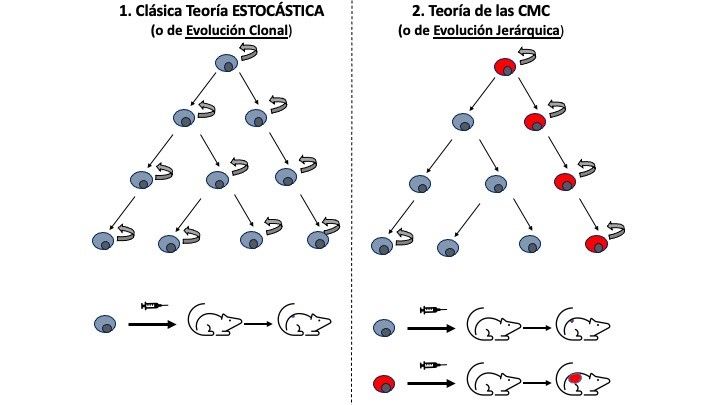
Durante décadas, la teoría estocástica o de evolución clonal del cáncer ha marcado la dirección estratégica de las terapias oncológicas. Esta teoría apunta a las células somáticas maduras, que acumulen al menos 5 mutaciones genéticas a lo largo de los años, como las formadoras de los tumores. No obstante, la incidencia de cáncer durante los primeros años de vida y el hecho de que en el adulto la mayoría de células somáticas diferenciadas son células que no se dividen y las mutaciones suelen aparecer consecuencia de la división, podrían desmontar el modelo. Por otro lado, la teoría indicaba que todas las células del tumor tendrían el mismo potencial para producir tumores. Estudios recientes han demostrado que para poder generar un nuevo tumor en ratones inmunodeprimidos, se requiere trasplantar por lo menos 10.000 células cancerosas.
La teoría de las CSC o de evolución jerárquica propone que no todas las células del tumor son iguales. Sólo unas pocas, con rasgos de célula madre, serían responsables de iniciar y mantener el tumor, situándolas en la parte superior del modelo jerárquico. Sería un proceso similar al ocurrido durante el desarrollo en la formación de los tejidos, con células diferenciadas situadas en la parte inferior del modelo.
Por desgracia, es frecuente que tras un tratamiento oncológico que inicialmente parece funcionar, aparezcan más tarde recidivas o metástasis. La teoría de las CSC sugiere que, en determinados tumores, la quimioterapia convencional no logra alcanzar a las CSC. Sin embargo, sí acabaría con las células diferenciadas o camino de la diferenciación que formarían el grueso del tumor, pero son incapaces de dividirse. Apoyando esto, estudios recientes demuestran que solamente cuando trasplantas CSC aisladas de tumores en animales inmunodeprimidos se generan nuevos tumores.
La nueva visión del origen del cáncer abre nuevas vías de investigación dirigidas directamente al corazón de los tumores, las CSC.
Evolución de las teorías sobre células madre
¿Qué diferencias hay entre las células madre normales presentes en los individuos tras el nacimiento y las células madre (CSC) formadoras de tumores?
Ambas poblaciones tienen propiedades similares. Expresan los mismos biomarcadores, comparte activas las mismas vías de señalización implicadas en proliferación/diferenciación (Wnt, Nocth y Sonic hedgehod) y tienen capacidad de migratoria que explicaría las metástasis. Además, del mismo modo que se obtiene in vitro células madre “normales” de tejido sano, pueden obtenerse CSC a partir de tumores. A pesar de estas similitudes, las CSC no son exactamente igual a nivel genético siendo también más proliferativas in vitro. Esto último, lo pude comprobar en mi tesis doctoral, al cultivar in vitro células madre aisladas a partir de tumores cerebrales, como son los glioblastomas, con respecto a cultivos de células madre “normales” aisladas de hipocampo de pacientes adultos. El hipocampo, zona del cerebro relacionada con la memoria y el aprendizaje, representa una zona del encéfalo que contiene células madre neurales activas durante toda la vida.
Algo interesante, que además tienen en común ambas poblaciones, es que poseen activos mecanismos celulares que les permiten escapar de tratamientos de radioterapia, quimioterapia e inmunoterapia. Presentan resistencia a daños electromagnéticos y químicos, sistemas de eliminación de las drogas fuera de la célula activo (transportadores ABC, del inglés ATP-bindinng cassette) y son capaces de escapar del control del sistema inmunitario, evitando así que éste pueda destruirlas. Relacionado con este último punto, una de las líneas de investigación abierta hoy en día en cáncer es justamente la inmunoterapia.
Lo que toda la comunidad científica tiene claro es que resulta vital conocer a fondo las características diferenciales de ambas poblaciones a la hora de establecer futuras dianas terapéuticas.
En los últimos años también han surgido estudios que apuntan en otra dirección y consideran la posibilidad de la desdiferenciación de células somáticas maduras. La desdiferenciación es el proceso por el cual una célula diferenciada vuelve a una etapa de desarrollo anterior. Es decir, es ir como para atrás en el desarrollo, toda célula madura diferenciada proviene de una célula madre y a través de esa desdiferenciación se transforman en células madre. En este sentido, las publicaciones del premio nobel Shinya Yamanaka sobre la producción in vitro de las denominadas células madre inducibles podría apoyar esta teoría. El grupo de Yamanaka fue capaz de generar in vitro células madre manipulando genéticamente células maduras de la piel de pacientes adultos
Futuras terapias con las CSC
En Medicina Oncológica, ¿qué implicaciones tiene sobre nuevas terapias la nueva teoría de las CSC? ¿Cuáles son las perspectivas y futuras terapias de las células madre contra el cáncer?
Las CSC han cambiado drásticamente las posibilidades de curación de tumores resistentes a tratamientos. Poder identificar y orientar la terapia hacia las CSC representa un desafío importante surgiendo numerosos estudios con distintas estrategias.
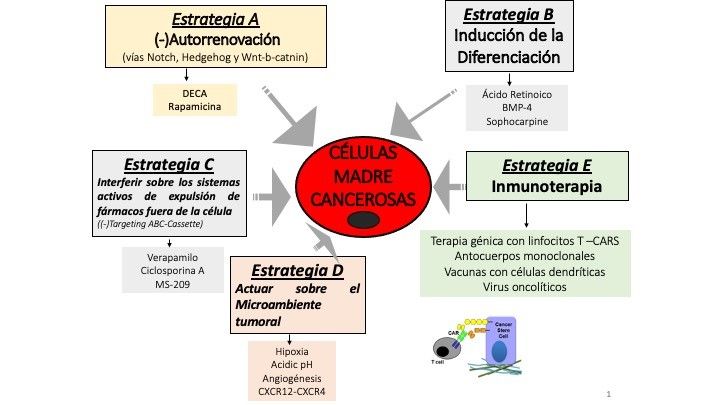
Por un lado, se trabaja en intentar inhibir la autorrenovación de las CSC actuando sobre vías de señalización activas en estas células como la vía del Notch, Hedgehog y Wnt-b-catennin. Así, por ejemplo, en neuroblastoma, un tipo de cáncer infantil del sistema nervioso, se ha utilizado DECA-14 y rapamicina para inhibir selectivamente la autorrenovación las CSC, sin apenas influir sobre las células madre normales
Otros apuestan por intentar inducir la diferenciación de las CSC presentes en el tumor. Teóricamente, si diferencias a la célula madre transformándola en célula diferenciada, ésta perdería la capacidad de autorrenovación y se detendría el proceso tumoral. En este sentido se prueban compuestos inductores de la diferenciación como el ácido retinoico, proteínas óseas morfogénicas (BMP-4) o sophocarpine, con buenos resultados
Otros grupos de investigación tratan de actúar sobre los sistemas que las CSC poseen para eliminar fármacos antitumorales fuera de la célula (ABC targeting cassette). En esta línea se ha probado con verapamilo, ciclosporina A y MS-209.
La idea de intentar actuar sobre el nicho tumoral cambiando las condiciones microambientales que parecen propiciar la transformación de las células a CSC también es un camino que muchos grupos están explorando.
Y, finalmente, destacamos la inmunoterapia. Mucha de la investigación reciente en cáncer se centra en el papel del sistema inmune en la prevención del cáncer y en la capacidad que poseen las células cancerosas para escapar del control del sistema inmune. Gracias a los esfuerzos, actualmente existen en la clínica tratamientos impresionantes de inmunoterapia con medicamentos dirigidos a los puntos de control inmunitario. Por ejemplo, Antígeno 4 de linfocitos T citotóxicos (CTLA-4) y de muerte celular programada/ligando-1 (PD-1/PD-L-1) para tumores sanguíenos y melanoma.
Como he comentado anteriormente, algunas CSC además de quimio y radio resistentes pueden esquivar la inmunoterapia gracias a no poseer determinadas proteínas antigénica que les permiten escapar de la muerte mediada por las células del sistema inmune linfocitos T. Además, estas células podrían liberar factores solubles inmunomoduladores (IL-10, IL-3, TGF-b) tornando al microambiente insensible a la acción del nuestro sistema de defensa.
¿Qué otras líneas de investigación están abiertas?
Existen estudios prometedores utilizando varias estrategias de inmunoterapia dirigidas a las CSC en el microambiente tumoral. Así, se trabaja con células T adaptativas (o terapia de linfocitos T con CARS), se investiga con vacunas basadas en un tipo de células del sistema inmunitario denominadas células dendríticas, además de explorar la utilización de virus oncolíticos y fármacos inhibidores de puntos de control inmunitario.
De cualquier modo, todavía queda camino por recorrer. Muchos de estos tratamientos también afectan a las células madre normales, resulta vital continuar investigando para conocer mejor las propiedades que las diferencian.
Hay algo en lo que todos estamos de acuerdo. Posiblemente, en el futuro, se requiera de una combinación de varias de estas nuevas terapias dirigidas a las CSC combinadas a su vez con las clásicas terapias dirigidas el grueso de los tumores. De este modo quizá, sí sería posible en el futuro poder acabar con cualquier tipo de tumor.
¿De dónde provienen esas CSC?
Nuevamente encontramos cierta controversia en relación al origen. Al principio, los autores se inclinaban ante la idea de que las CSC procedían del remanente de células madre “normales” presentes en los tejidos. Así, se suponía que estas células mantenían un equilibrio entre proliferación y desarrollo de los tumores. Y como consecuencia de la adquisición de daños en el ADN, la balanza lograba inclinarse hacía la aparición de la masa tumoral. Así, por ejemplo, está descrito que las células madre neurales (que expresan el biomarcador de célula madre nestina) son más susceptibles a las mutaciones genéticas.
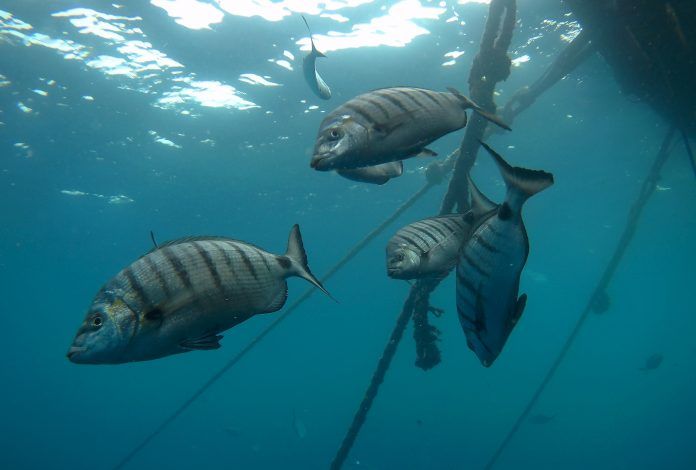
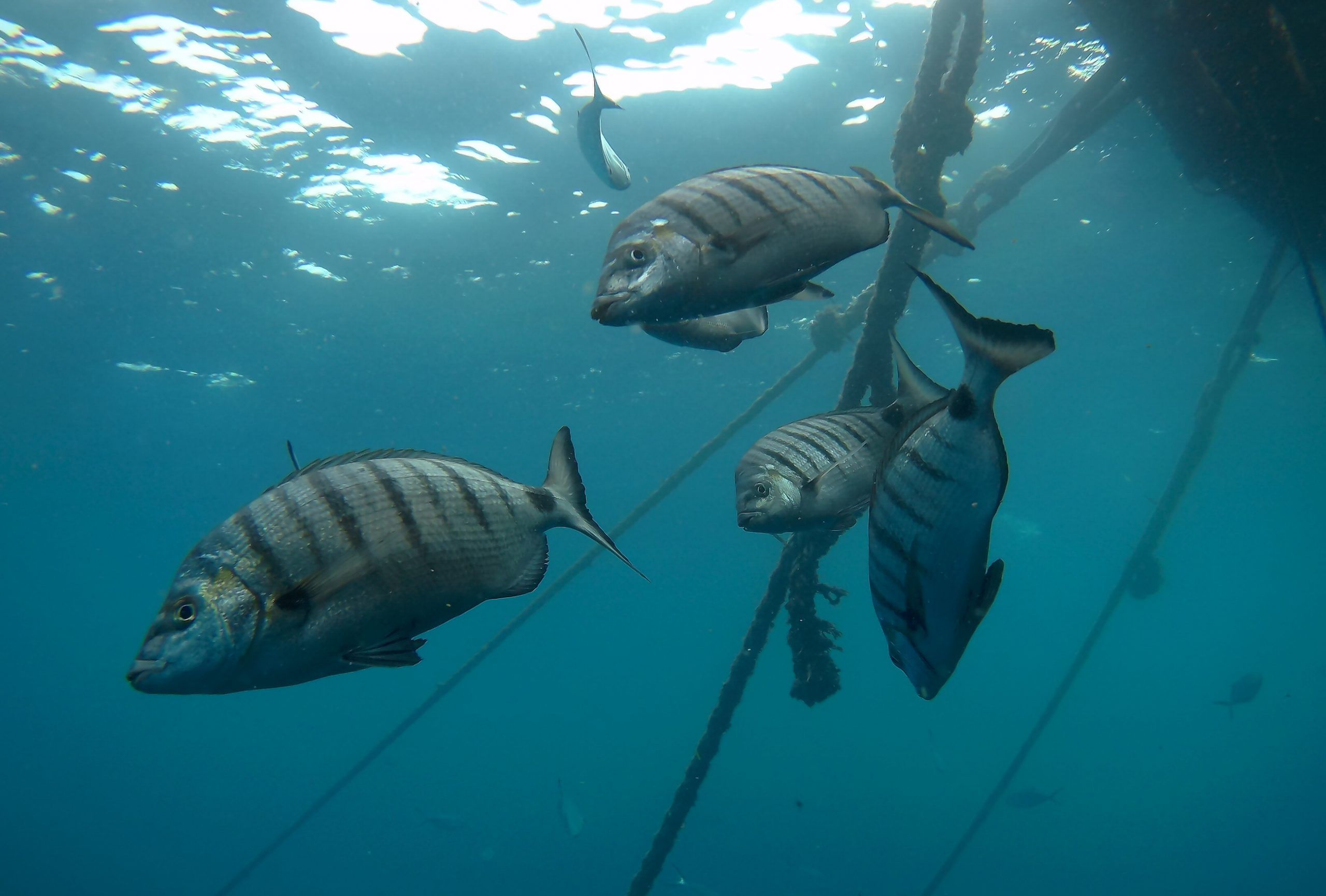
El fototrampeo permite la captación de imágenes subacuáticas al equipo de la CEU UCH para el estudio de peces salvajes en torno a granjas acuícolas de Canarias y la Comunidad Valenciana, en el proyecto Parapez 3.
Escucha la entrevista al profesor Jordi López Ramon, investigador principal del proyecto Parapez, en el programa Españoles en la mar, de Radio Exterior de España-RNE.
El fototrampeo permite la captación de imágenes subacuáticas al equipo de la CEU UCH para el estudio de peces salvajes en torno a granjas acuícolas de Canarias y la Comunidad Valenciana, en el proyecto Parapez 3.
Investigadores de la Facultad de Veterinaria de la Universidad CEU Cardenal Herrera (CEU UCH) de Valencia han puesto en marcha la tercera edición del proyecto Parapez, para la “Evaluación de la transmisión de parasitismo de especies de peces cultivados y salvajes”. La obtención de imágenes subacuáticas nocturnas en mar abierto permitirá completar el estudio de la fauna salvaje que rodea a las granjas acuícolas en aguas de Canarias y de la Comunidad Valenciana participantes en el estudio. El proyecto Parapez renueva por tercer año consecutivo la colaboración de la Fundación Biodiversidad, del Ministerio para la Transición Ecológica y el Reto Demográfico, a través del Programa pleamar, cofinanciado por el Fondo Europeo Marítimo y de Pesca (FEMP).
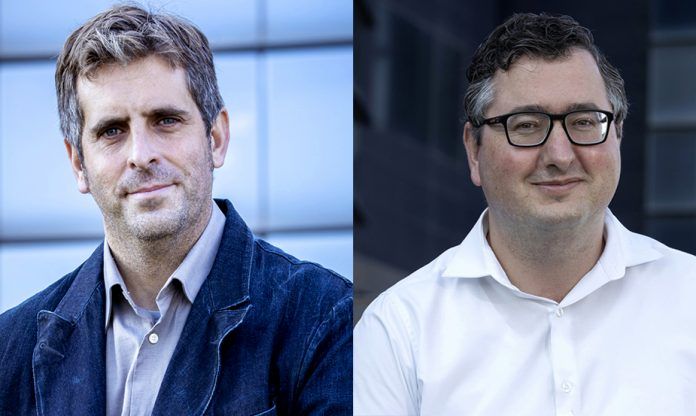
La propuesta del profesor de Magisterio Juan Manuel Monfort se recoge en el artículo “Las competencias clave y los tiempos de crisis”, publicado en la obra colectiva “Pandemia y resiliencia”, de la editorial EUNSA
El profesor Jaime Vilarroig es autor del artículo “La educación en la paciencia y en la vulnerabilidad” en la misma obra colectiva
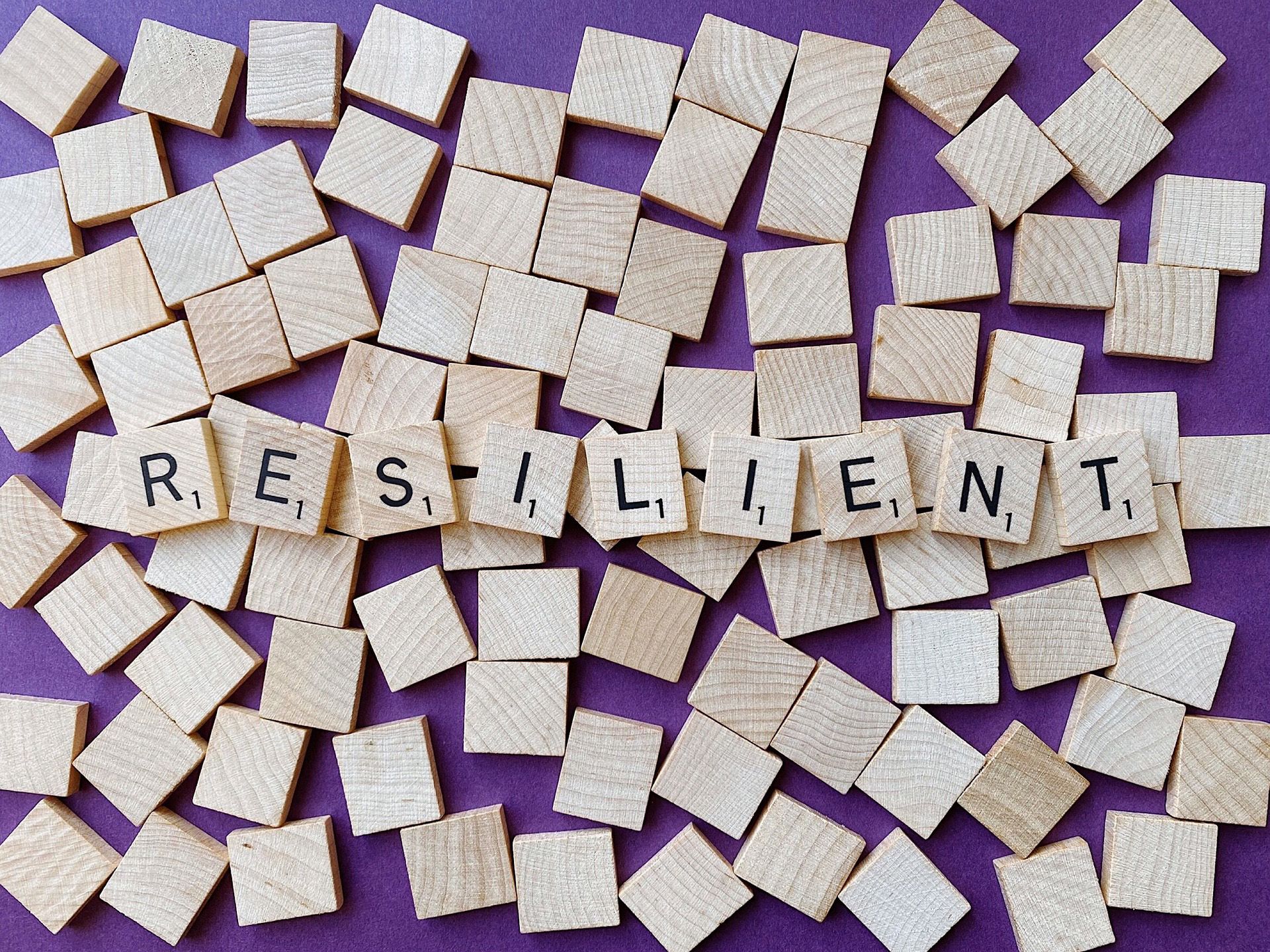
El libro analiza los retos educativos que plantea la inédita situación de la pandemia de la Covid-19 desde una perspectiva multidisciplinar y con un denominador común: la importancia de la actitud resiliente
8-2-2021.- La Covid-19 nos ha recordado nuestra fragilidad y vulnerabilidad, ha puesto a prueba nuestra capacidad para soportar la frustración, nos ha obligado a romper con nuestra “normalidad” y ha hecho temblar los cimientos de nuestra existencia. ¿Y si pudiéramos aprender en la escuela a afrontar en mejores condiciones situaciones de crisis como esta? Esa es la propuesta del profesor de Magisterio de la Universidad CEU Cardenal Herrera de Castellón Juan Manuel Monfort, que aboga por incluir la competencia existencial en el sistema educativo europeo, para educar también desde la escuela en aspectos como la paciencia o la vulnerabilidad.
En su artículo “Las competencias clave y los tiempos de crisis”, publicado en la obra colectiva “Pandemia y resiliencia”, de la editorial EUNSA, el experto asegura que esta crisis conlleva una oportunidad para reflexionar sobre la importancia de educar en la denominada competencia existencial o espiritual.
‘¿Y si pudiéramos aprender en la escuela a afrontar en mejores condiciones situaciones de crisis como esta?’
Resiliencia: superar la frustración ante la fragilidad
Esta competencia, asegura Monfort, “permite conocer las diferentes respuestas que el ser humano ha dado al sentido global de la existencia y nos prepara para ser más resilientes y para superar la frustración y la fragilidad de nuestra sociedad y nuestros planes”. “No cabe duda, añade el experto, de que es necesario fortalecer la dimensión más profunda del ser humano para desarrollar competencias tecnológicas o científicas que permitan acabar con crisis como la que estamos viviendo”.
Para el investigador, además, se trata de una competencia clave en cualquier contexto. Y es que, asegura, “aunque las situaciones límite son las que obligan al ser humano a desarrollar determinadas habilidades y recursos intelectuales y vitales para hacerles frente, nos engañaríamos si pensáramos que no es útil en el plano personal, donde las crisis son recurrentes incluso en épocas de bonanza o estabilidad comunitarias”.
‘La competencia existencial no está presente en el sistema educativo europeo, que supuestamente busca preparar ciudadanos capaces de adaptarse a escenarios futuros’
Sin embargo, recuerda Monfort, a pesar de su importancia, la competencia existencial no está presente en los currículos del sistema educativo europeo “que supuestamente busca preparar ciudadanos competentes, preparados para abordar los desafíos del siglo XXI y con capacidad de adaptación a los escenarios que están por venir”.
Paciencia en pandemia
Otro de los profesores de Magisterio del CEU de Castellón que ha participado en esta obra colectiva es Jaime Vilarroig. En su artículo “La educación en la paciencia y en la vulnerabilidad”, este doctor en Filosofía reivindica la oportunidad que ha proporcionado la pandemia para realizar una reflexión profunda sobre la vulnerabilidad del ser humano y la respuesta que puede dar ante las crisis.
Vilarroig reivindica la oportunidad que ha proporcionado la pandemia para reflexionar sobre la vulnerabilidad del ser humano
A través de un repaso por la obra de pensadores como Leibniz, Voltaire o las reflexiones del Libro de Job, el investigador pone el acento en la necesidad de educar específicamente en la paciencia para enfrentar este tipo de situaciones. Una virtud que, recuerda Vilarroig, “no ha de confundirse nunca con la resignación, pues forma parte de la virtud cardinal de la fortaleza” y que, además, debería ir de la mano de la solidaridad, “en el sentido de que, ante crisis como la que estamos viviendo, tenemos que preguntarnos qué podemos hacer por el otro”.
Obra colectiva de expertos
Los artículos de los profesores Monfort y Vilarroig forman parte de la obra colectiva “Pandemia y resiliencia”, impulsada por el grupo de investigación Trivium Familia, Educación y Escuela Inclusiva, coordinado desde la Universitat Abat Oliba CEU de Barcelona, en la que participan también profesores de otras Universidades CEU y diversos centros educativos.
El libro intenta dar respuestas a los retos que plantea la inédita situación de la pandemia de la Covid-19 desde una perspectiva multidisciplinar y con un denominador común: la importancia de la actitud resiliente de todos los agentes implicados en la acción educadora.
Los investigadores abordaron las pseudociencias en un artículo conjunto reciente. En el próximo reflexionarán sobre la educación de la resiliencia a través de los mitos
futuras terapias de las células madre contra el cáncer
· Esther Mancheño Maciá, a CEU UCH researcher based in Elche, is working on the stem cell model, which could change how the origin of cancer is traditionally viewed and generate new areas for cancer treatment research.
Esther Mancheño is researching new cancer treatments using stem cells
Dr Esther Mancheño’s research into cancer has focused on two areas in recent years: Cancer Stem Cells and the drug monitoring of anti-tumour treatments. In the latter case, this forms part of the work of the Clinical Pharmacy and Nutrition Research Group (CEU UCH), led by Dr Vanesa Escudero. For Dr Mancheño, who undertook her doctorate at the Instituto de Neurociencias CSIC-UMH, cancer stem cell (CSC) research opens up new perspectives on the origin of tumours. “The hypothetical model that stem cells form tumours is not yet totally clear – there’s still some controversy. But, if that is true, then that would change the traditional view we have of cancer and it could open up new areas for cancer treatment research,” she told us. It’s important to remember that the discovery of CSCs is relatively recent, being first identified in 1997. CSCs may well be responsible for the initiation, maintenance and expansion of tumours and their resistance to conventional cancer treatment may be behind relapses and metastases. In this interview, Esther gives us some revealing insights into stem cells and the future cancer treatments on the horizon.
With regard to how cancers get started, in what way is this new CSC theory different from the classic view?
For decades, the stochastic or clonal evolution model of cancer has formed the basis of cancer treatment strategies. In this theory, it’s the mature somatic cells, which accumulate at least five genetic mutations over the years, which initiate tumours. However, we know that cancer can occur during the first years of life; that, in adults, most differentiated somatic cells do not divide; and that mutations usually appear as a consequence of cell division. All this seems to undermine the model. And then this theory holds that all the cells in a tumour would have the same potential to generate a new tumour, but recent research has shown that, in order to generate a tumour in immunocompromised mice, you need to transplant at least 10,000 cancer cells.
In the CSC or hierarchical model, not all cells in the tumour are the same. Only a few of them, ones with stem-cell characteristics, can initiate and maintain the tumour, placing them near the top in the hierarchical model. The process would, therefore, be similar, to that of tissue formation, with the differentiated cells being at the bottom of the hierarchy.
Unfortunately, what we often see is that a particular treatment for cancer may be initially effective but then we see a relapse and metastasis. The CSC theory suggests that, perhaps in certain tumours, conventional chemotherapy is not able to reach these CSCs. The treatment does kill the differentiated cells or those on the way to differentiating, which make up most of the tumour, but these cannot divide. Some recent research supports this view: it is only when you take CSCs from tumours and transplant them into immunocompromised animals that you get new tumours.
This new view of how cancer starts opens up new areas of research focused on the very heart of tumours, the CSCs.
Comparison of the traditional and CSC models
What’s the difference between the normal stem cells that are present after birth and the stem cells that form tumours, the CSCs?
Both types have similar properties. They have the same biomarkers, they share the same active signalling pathways for proliferation and differentiation (Wnt, Notch and Sonic hedgehog) and they can migrate, which would explain how metastasis happens. And just as we can obtain “normal” stems cells in vitro from healthy tissue, we can get CSCs from tumours. Despite these similarities, CSCs are not exactly the same at the genetic level and they proliferate more in vitro. This was something I saw for myself during my doctorate, as I cultivated stem cells in vitro, which originated from brain tumours such as glioblastomas, and compared them with “normal” stem cells taken from the hippocampus of adult patients. The hippocampus, an area of the brain related to memory and learning, possesses neural stem cells which are active throughout our lives.
What is interesting is that both types of stem cell possess certain active cellular mechanisms which enable them to sidestep the effects of radiotherapy, chemotherapy and immunotherapy. They show resistance to electromagnetic and chemical damage, possess systems for the removal of drugs from the active cell, such as ATP-binding cassette (ABC) transporters, and they’re capable of breaking free of the control of the immune system and so of avoiding being destroyed by it. With regard to the latter problem, immunotherapy is an important research area for cancer, currently.
Everyone in the scientific community agrees that it’s crucial to gain a deeper understanding of the real differences between the two types of stem cell, as that will generate targets for the development of new treatments.
In recent years, research has been published which points in the opposite direction and considers the possibility of the dedifferentiation of mature somatic cells. Dedifferentiation is the process by which a differentiated cell reverts to a form seen at an earlier stage of development. In other words, it’s like turning the clock back for development, as every differentiated cell derives from a stem cell, and so this dedifferentiation turns them into stem cells themselves. The work published by the Nobel prize-winning researcher Shinya Yamanaka regarding the in vitro production of induced pluripotent stem cells may support this idea. Yamanaka’s group has been able to produce stem cells in vitro by genetically manipulating mature adult skin cells.
Future CSC therapies
What impact will the new CSC theory have on cancer treatment? What are the prospects for the future and what new therapies might there be which take advantage of cancer stem cell research?
The discovery of CSCs has drastically changed the outlook for eliminating tumours which are otherwise resistant to treatment. To be able to identify CSCs and target therapy at them is a major challenge and one for which many studies are being carried out, following a range of different strategies.
One focus of attention is on trying to inhibit the capability for self-renewal of CSCs by targeting the active signalling pathways in these cells, such as Notch, Hedgehog and Wnt/β-catenin. So, for example, in neuroblastomas, a type of cancer affecting children which begins in the nervous system, the compounds known as DECA-14 and rapamycin have been used to selectively inhibit CSC self-renewal, with little impact on normal stem-cells.
Another approach concerns inducing the differentiation of the CSCs present in the tumour. Theoretically, if you can transform the CSC into a differentiated cell, it would then lose its ability to self-renew and, overall, the tumour would cease to grow. Examples of differentiation-inducing compounds being trialled are retinoic acid, bone morphogenetic proteins (BMP-4) and sophocarpine, and we’re seeing good results.
Other research groups are working on the systems CSCs have to expel anti-tumoural drugs from the cell, ATP-binding cassette (ABC) transporters. Compounds such as verapamil, cyclosporin A and MS-209 have been tested in this area.
The idea of attacking the niche enabling tumours to develop, by changing the microenvironmental conditions which seem to encourage the transformation of cells into CSCs, is also something that many groups are exploring.
And then, finally, there’s immunotherapy. Much recent cancer research has focused on the role of the immune system in preventing cancer and on the ability of cancerous cells to escape the control of the immune system. Thanks to all the work that has been done, there are some impressive types of immunotherapeutic treatment in clinical use which focus on immune checkpoints, such as CTLA-4 (cytotoxic T-lymphocyte-associated protein 4) and PD-1/PD-L1 (programmed cell death-1 and ligand-1 of programmed cell death-1), for blood cancers and melanomas.
As I said earlier, some CSCs can be resistant to chemo and radiotherapy and also resist immunotherapy because they don’t have certain antigenic proteins, enabling them to avoid cell death provoked by the immune system’s T cells, a type of white blood cell. These CSCs can also release soluble factors which inhibit the activity of the immune system (IL-10, IL-3, TGF-b), protecting their microenvironment from our body’s defence mechanisms.
What other things are the focus of research?
There are some promising studies regarding different immunotherapeutic strategies for CSCs in the tumoural microenvironment. So, there’s work being done on adaptive T-cells (or CAR T-cell therapies), there are vaccines being developed which are based on called dendritic cells, which from part of the immune system, and the use of oncolytic viruses and immune checkpoint inhibitors is also being explored.
In any case, there’s still a long way to go. Many of these treatments affect normal stem cells, so it’s crucial to continue investigating what properties really differentiate these cells from CSCs.
There is something we all agree on. It may be that, in the future, a combination of several of these new types of therapy targeting CSCs may be needed together with more traditional therapies which target the larger tumoural mass. In this way, it may be possible to eliminate tumours of any type.
Where do these CSCs come from?
Here again there is some controversy regarding the origin of CSCs. At first, researchers favoured the idea that CSCs derived from the remaining “normal” stem cells present in tissues. The idea is that these cells maintain a balance between proliferation and the development of tumours. As a consequence of DNA damage, the balance changes in favour of the appearance of tumours. So, for example, it has been reported that neural stem cells (which express the stem cell biomarker nestin) are more susceptible to genetic mutations.