The CEU Cardenal Herrera University’s AviFeed Science research group, led by Veterinary Medicine lecturers Professor Carlos Garcés and Dr Mariola Soler, is participating in an innovative project: the design of feed for laying hens using natural olive extracts, insect flours and fats, raised on a substrate made from olive tree waste.

A group of researchers from the CEU Cardenal Herrera University (CEU UCH) in Valencia is participating in a European project to develop a circular economy model based on the reuse of waste from olive oil production. Its goal is to transform waste generated from olive production process into sustainable and valuable products, such as animal feed, functional additives, biodegradable packaging, and biogas. The project, entitled “Repurposing olive waste in circular economy solutions for feeds, additives, packaging, and biogas (OliWa)”, and funded by the European Union through the PRIMA programme involves 24 partners from six Mediterranean countries: Italy, Spain, Greece, Turkey, Tunisia, and Algeria.
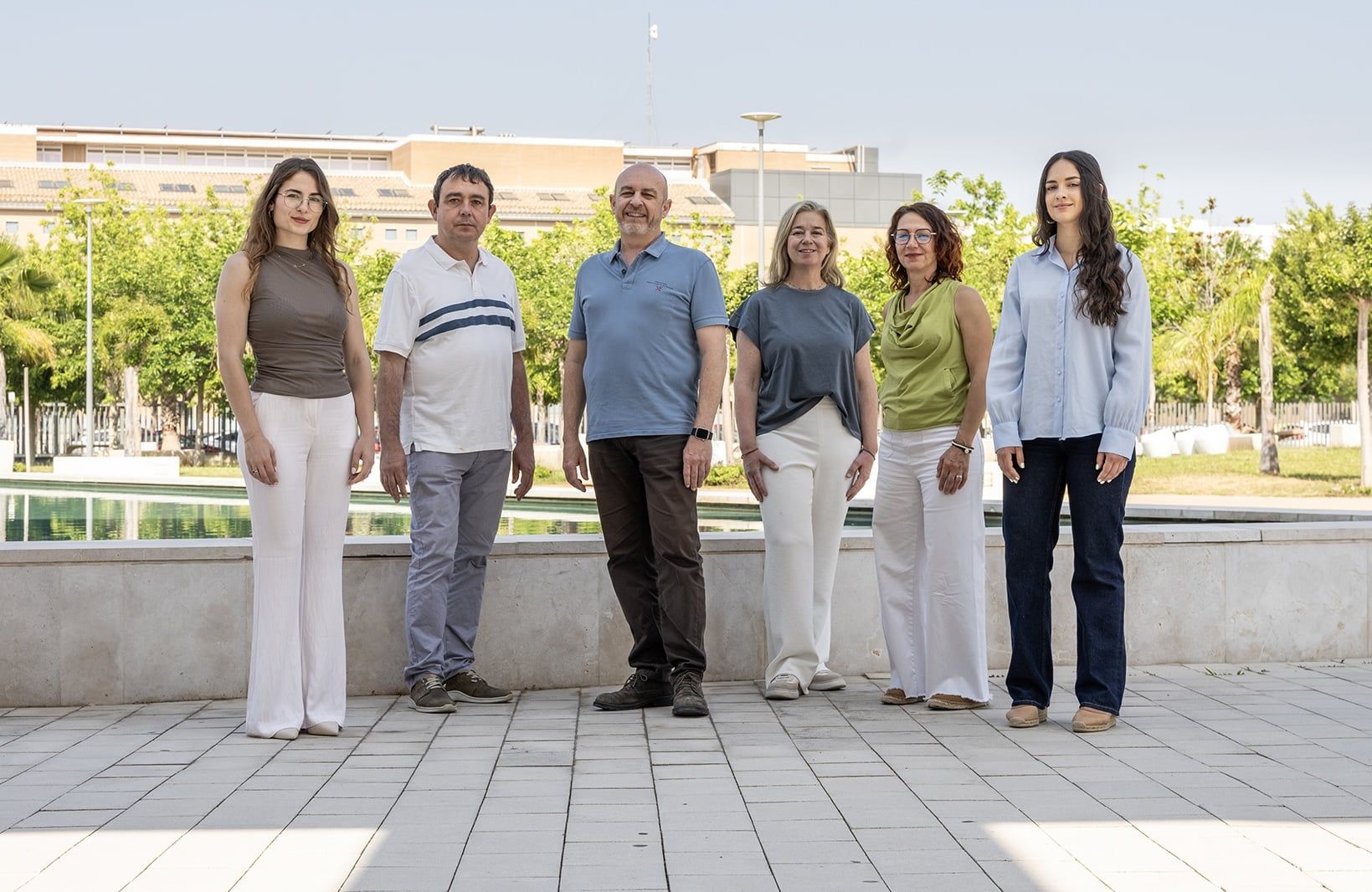
The CEU UCH team in the OliWa project is made up of researchers from the AviFeed Science group, which is dedicated to animal production and nutrition. The lead researchers for the project are Prof Carlos Garcés Narro, Professor of Animal Production, and Dr Mariola Soler Sanchis, Senior Lecturer, who are both affiliated to the Faculty of Veterinary Medicine at CEU UCH. The team also includes Dr Olga Piquer, Dr José Antonio García Bautista and Dr María Palomar, and trainee researcher Araceli Orozco. As part of this project, the AviFeed Science group will be responsible for developing functional feed for laying hens that includesnatural olive extracts, along with flour and fats from insects bred on substrates derived from olive tree waste.
Experts in avian nutrition
The AviFeed Science group at CEU UCH has extensive research experience in avian nutrition, with numerous studies on zootechnical performance, egg quality, animal welfare, intestinal health and microbiota, especially in poultry. For its lead researcher, Professor Carlos Garcés of CEU UCH, “the OliWa project offers us a strategic opportunity to consolidate the applied research we do in the AviFeed Science group in the agri-food field. And it’s also a chance to strengthen our international presence and to create links with the circular economy, sustainability and functional animal production”.
Along with designing, evaluating, and validating feed for laying hens with natural olive extracts and insect flours and fats, the CEU UCH team will also take on other tasks, as explained by Dr Mariola Soler: “In this project, we will conduct animal nutrition studies and physical, chemical, and sensory testing of eggs obtained after using these ingredients as feed. We will also evaluate the nutraceutical effects of the extracts in animal products, including the improvement of the fatty acid and antioxidant profile in eggs. And we will communicate our results to local producers in order to promote sustainable business models in the Mediterranean agri-food sector.”
The OliWa project is funded by the European Union through the PRIMA programme and involves 24 partners from six Mediterranean countries: Italy, Spain, Greece, Turkey, Tunisia, and Algeria
OliWa: animal feed, packaging, biogas
In addition to considering feed formulations such as the one designed by CEU UCH researchers for laying hens, the OliWa project will analyse the antioxidant and antimicrobial effects of natural olive extracts. It will also evaluate the potential of insect farming using olive waste, the development of biodegradable active packaging, enriched with natural extracts and polysaccharides derived from insects and olive waste, and the production of biogas from insect waste, manure and olive by-products. The dissemination of its results will promote new sustainable business models in the Mediterranean area.
The OliWa project, launched this June and scheduled to last three years, receives €4.5 million in funding from the Programa Europeo PRIMA: Partnership on Research and Innovation in the Mediterranean Area and European Union (Grant Agreement Number 2432 — OLIWA). This European initiative, coordinated by the University of Turin, aims to support R&D&I to improve the efficiency and sustainability of agri-food systems and the quality, availability and management of water in the Mediterranean area. The budget for the task led by CEU UCH is €268,750.